
Seasons & episodes
 S9 · E19Vietnam: A Television History (10): Homefront USA 1997-07-21 · 55 min
"Vietnam: A Television History - Homefront U.S.A.," traces the widening rift between supporters and opponents of the war, from the first demonstrations in the mid-1960s to the May 1970 Kent State shootings.
 S9 · E20Vietnam: A Television History (11): The End of the Tunnel 1997-07-28 · 55 min
"Vietnam: A Television History" concludes with "The End of the Tunnel," which recalls the 1973 Paris accords and the subsequent collapse of South Vietnam. Included: vivid footage of helicopter evacuations in Saigon during the final hours before the Communists took the city on April 30, 1975.
S9 · E30T.R.: The Story of Theodore Roosevelt (3): The Good Fight 1996-10-07 · 55 min
TR is just 46 years old when he is inaugurated as president. He builds the Panama Canal, wins the Nobel Prize for Peace, and combatively introduces widesweeping social reforms. As his presidency draws to a close, TR names his best friend, Secretary of War William Howard Taft, as his successor. Taft wins the 1908 election.
S9 · E31T.R.: The Story of Theodore Roosevelt (4): Black Care 1996-10-07 · 55 min
TR opposes his old friend Taft for the 1912 Republican nomination. When Taft wins, TR runs for president with his own Progressive Party. Despite enormous popular support, he loses to Democrat Woodrow Wilson. TR, now 55, retreats to the jungles of Brazil for two years for what becomes the most harrowing expedition of his life. His four sons join the World War I effort; shatters TR. Nearly six months later, he dies in his sleep at Sagamore Hill.
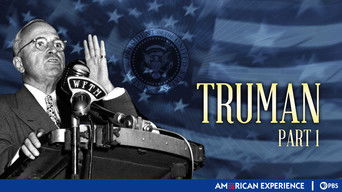 S10 · E1Truman (1): An Accident of Democracy 1997-10-05 · 55 min
A study of Harry S. Truman, the 33rd president. Part 1 covers his service during World War I; his accomplishments as a small-time Kansas City politician; his two terms as a Missouri senator.
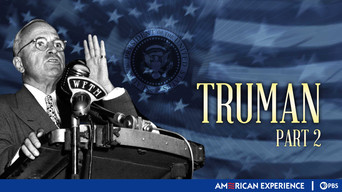 S10 · E2Truman (2): The Moon, the Stars and All the Planets 1997-10-06 · 55 min
Harry S. Truman recalls his post-WWII economic policies; his 1948 presidential campaign; the Korean War; and his celebrated clash with Gen. Douglas MacArthur.
 S10 · E3A Midwife's Tale 1998-01-19 · 55 min
Chronicling the efforts of historian Laurel Thatcher Ulrich to gather facts about early American life through the diaries of Maine resident and midwife Martha Ballard (1735?-1812). Included: dramatizations of some of the passages; and the use of town documents to supplement some of Ballard's accounts.
 S10 · E4Mr. Miami Beach 1998-02-02 · 55 min
Recalling the life of Carl Fisher, the entrepreneur who “sold the glamour of Florida” and turned a swampland into Miami Beach. Included: how he developed the resort town using topsoil from the Everglades and sand from Biscayne Bay.
 S10 · E5Influenza 1918 1998-02-09 · 55 min
Chronicling the epidemic of the Spanish flu in 1918, which claimed “more than 600,000 lives.” Included: futile attempts to develop a vaccine; and how the virus spread to Europe.
 S10 · E6Reagan (1): Lifeguard 1998-02-23 · 115 min
The life and legacy of Ronald Reagan are examined in a two-part study, beginning with his impoverished childhood; his start as a radio sportscaster and career as an actor; his two terms as governor of California; and his 1980 election to the Presidency. Among those interviewed: Nancy Reagan and Ron Reagan Jr.
 S10 · E7Reagan (2): An American Crusade 1998-02-24 · 55 min
The conclusion of a biography of Ronald Reagan focuses on the president's second term and includes his defense-spending policies and the Iran-Contra scandal.
 S10 · E8Surviving the Dust Bowl 1998-03-02 · 55 min
Children of 1930s Plains farmers recall the Dust Bowl, the eight-year drought that was made far worse by the 30 years of aggressive farming that preceded it. "A lot of people thought it was the end of the world," one survivor says.
 S10 · E9Riding the Rails 1998-04-13 · 55 min
During the Depression-era 1930's, tens of thousands of teenagers hopped freight trains in search of a better life elsewhere. What they found was a mixture of adventure, camaraderie, hardship and loneliness. The evocative stories of teen hoboes crisscrossing America during tough times.
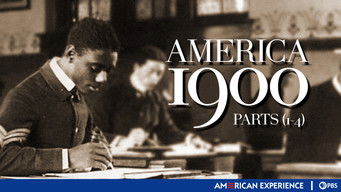 S11 · E1America 1900 1998-11-18 · 55 min
Over one hundred years ago, Americans looked forward to the uncertainty of a new century with a mixture of confidence, optimism and anxiety. Following a range of characters from famous public figures to ordinary citizens, this chronicle of a year in the life of America examines the forces of change that would come to shape the twentieth century.
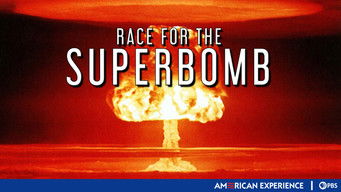 S11 · E2Race for the Superbomb 1999-01-11 · 55 min
At the dawn of the Cold War, the United States initiated a top secret program in New Mexico to build a weapon even more powerful than the atomic bomb dropped on Japan. A world away, on the frozen steppes of Siberia, the Soviet Union began a similar effort. A web of spies and scientists, intrigue and deception marked the race to develop the hydrogen bomb, a weapon that would change the world.
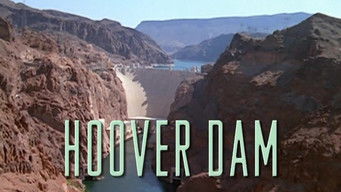 S11 · E3Hoover Dam 1999-01-18 · 55 min
Rising more than 700 feet above the raging waters of the Colorado River, it was called one of the greatest engineering works in history. Hoover Dam, built during the Great Depression, drew men desperate for work to a remote and rugged canyon near Las Vegas. There they struggled against heat, choking dust and perilous heights to build a colossus of concrete that brought electricity and water to millions and transformed the American Southwest.
 S11 · E4Alone on the Ice 1999-02-08 · 55 min
In June 1934, Richard Byrd lay alone in a small hut within the polar ice, hovering near death. No one before Byrd had ever experienced winter in the interior of the Antarctic. In an age of heroes, he was one of America's greatest. An explorer, aviation pioneer and scientist, Byrd was also an egotist, a risk-taker, and, his critics claim, a fraud who sometimes took credit for the accomplishments of others.
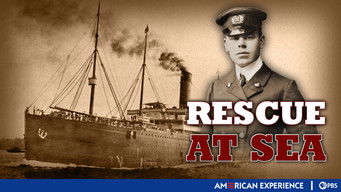 S11 · E5Rescue at Sea 1999-02-15 · 55 min
On January 23, 1909, two ships -- one carrying Italian immigrants to New York City, the other, American tourists to Europe -- collided in dense fog off Nantucket Island. In a moment, more than 1,500 lives became dependent on a new technology, wireless telegraphy, and on Jack Binns, a twenty-six-year-old wireless operator on board one of the ships. A story of courage, luck, and heroism at sea.
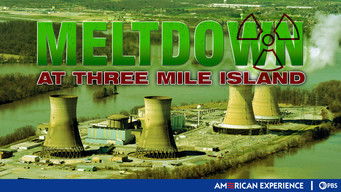 S11 · E6Meltdown at Three Mile Island 1999-02-22 · 55 min
At 4:00am on March 28, 1979, a reactor at the Three Mile Island nuclear power facility near Harrisburg, Pennsylvania suddenly overheated, releasing radioactive gasses. During the ensuing tension-packed week, scientists scrambled to prevent the nightmare of a meltdown, officials rushed in to calm public fears, and thousands of residents fled to emergency shelters. Equipment failure, human error, and bad luck would conspire to create America's worst nuclear accident.
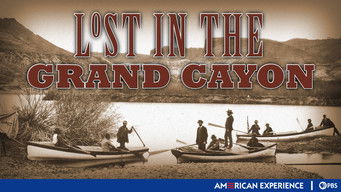 S11 · E7Lost in the Grand Canyon 1999-04-05 · 55 min
In the summer of 1869, a one-armed Civil War veteran led the first expedition down the Colorado River through the Grand Canyon. John Wesley Powell's epic journey into the unknown established the Grand Canyon as a national landmark, and made him a hero. But when he used his fame to argue against the overdevelopment of the West, Powell was attacked.
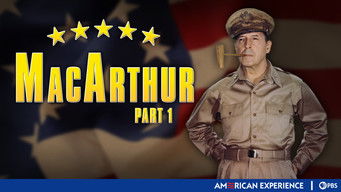 S11 · E8MacArthur (1): Destiny 1999-05-17 · 55 min
Part 1 of a two-part biography of Douglas MacArthur takes "America's first soldier" from his brilliant WWI service into WWII, when his knack for alienating superiors hindered his "return" to the Philippines. Interviewed: biographer Geoffrey Perret; historian Stephen Ambrose; Gen. Vernon Walters (USA Ret.).
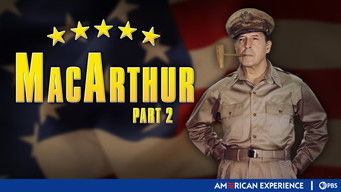 S11 · E9MacArthur (2): The Politics of War 1999-05-18 · 55 min
The conclusion of "MacArthur" focuses on his "return" to the Philippines in 1944, his years as Supreme Allied Commander in Japan after the war and his controversial command in Korea. Interviewed: onetime MacArthur aide Alexander Haig; historian David McCullough
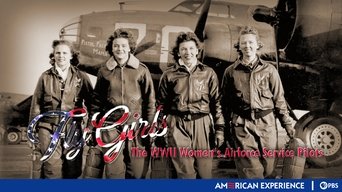 S11 · E10Fly Girls 1999-05-24 · 55 min
During WWII, more than a thousand women signed up to fly with the U.S. military. Wives, mothers, actresses and debutantes who joined the Women Airforce Service Pilots (WASPS) test-piloted aircraft, ferried planes and logged 60 million miles in the air. Thirty-eight women died in service. But the opportunity to play a critical role in the war effort was abruptly canceled by politics and resentment, and it would be 30 years before women would again break the sex barrier in the skies.
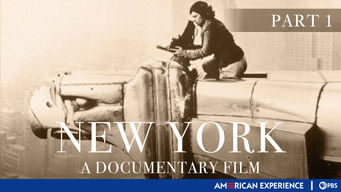 S12 · E1New York (1): The Country and the City 1999-11-14 · 55 min
The Country and the City, 1609-1825: New York, notes narrator David Ogden Stiers, "was a business proposition from the very start," when Henry Hudson, exploring for the Dutch East India Company, sailed into its harbor. Part 1 also focuses on New Yorker Alexander Hamilton, the first Treasury Secretary; and Gov. DeWitt Clinton, who built the Erie Canal. "All America," says Stiers, "now met in New York."