
Seasons & episodes
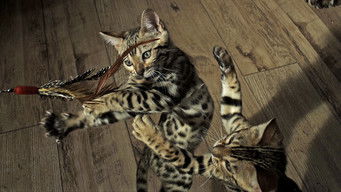 S34 · E5Pets: Wild At Heart: Playful Creatures 2015-10-21 · 53 min
Mini-cameras, moving x-rays and night vision cameras capture the wild behavior of parakeets, hamsters, cats, rabbits and Peruvian dogs.
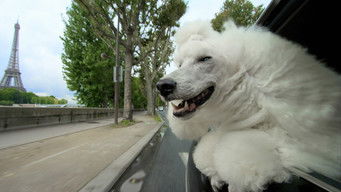 S34 · E6Pets: Wild At Heart: Secretive Creatures 2015-10-28 · 53 min
Moving x-rays, ultraviolet light and doggycams show how pets experience their world through hidden channels of communication.
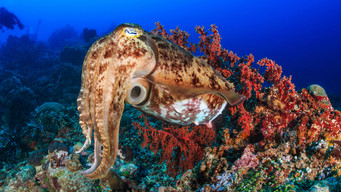 S34 · E7Natural Born Hustlers: Staying Alive 2016-01-13 · 53 min
Staying Alive offers stories about unusual survival techniques. Cuttlefish, for example, elude their many predators with a kind of invisibility cloak. Other ruses revealed include: why burrowing owls, who live underground, mimic the sounds of rattlesnakes; how imitation may not just be the sincerest form of flattery, it can also save your life; and what deception the regal horned lizard employs as a last resort to keep a menacing coachwhip snake at bay.
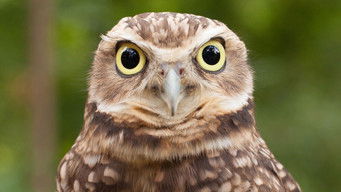 S34 · E8Natural Born Hustlers: The Hunger Hustle 2016-01-20 · 53 min
Exploring the duplicitous ways in which animals try to secure their next meal. Singled out is the devious drongo, a South African bird. In winter, he has to rely on grubs and insects that live underground, but other animals are far better equipped to dig them up, so the drongo devises a con. He serves as lookout while vulnerable social weaver birds are on the ground digging up food. Among other segments: the orchid mantis, which attracts insects by mimicking a flower and why it is even more successful than the real thing; how killer whales use sound to manipulate the behavior of herring to their advantage; and how and why gray squirrels practice sleight of hand to protect the nuts they’ve gathered to get them through the winter.
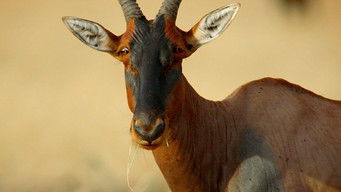 S34 · E9Natural Born Hustlers: Sex, Lies & Dirty Tricks 2016-01-27 · 53 min
Sex, Lies & Dirty Tricks explores sneaky mating techniques. For example, a lusty low-ranking male in a mob of red kangaroos considers possible plan A and plan B options when only the alpha male has the right to mate with the females in the group. A male marsh harrier’s solution to avoid conflict with a dominant resident male during breeding season is to grow feathers that make him look like female. He fools the resident male, but is able to woo a real female and settle down to raise a family. The final hour also exposes the dark ways brood parasites avoid parental duties, and how their chicks go even further to get the full attention of their foster parents. It’s a tough world out there, so it’s not surprising that crafty animals turn to disguise, illusion, duplicity and mimicry to beat the odds and live another day.
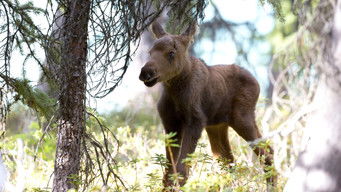 S34 · E10Moose: Life of a Twig Eater 2016-02-10 · 53 min
Exploring the world of moose in the Canadian Rockies, focusing on a calf's first year of life.
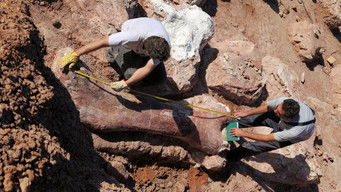 S34 · E11Raising the Dinosaur Giant 2016-02-17 · 53 min
Paleontologists bring the largest dinosaur ever discovered to virtual life.
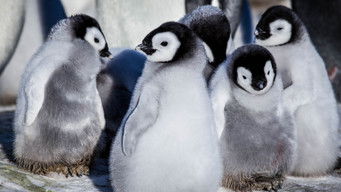 S34 · E12Snow Chick 2016-02-24 · 53 min
The incredible journey of one vulnerable and charismatic Emperor penguin chick.
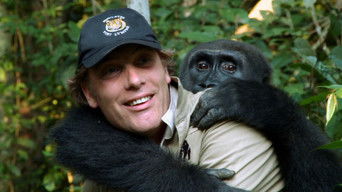 S34 · E13Animal Reunions 2016-03-30 · 53 min
Reunions between wild animals and their caregivers reveal whether interspecies bonds can stand the test of time.
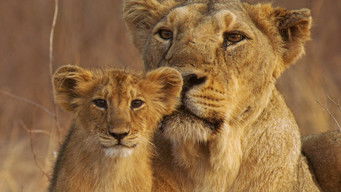 S34 · E14India's Wandering Lions 2016-04-13 · 53 min
As India’s population booms, her legendary wildlife has been squeezed almost out of existence. But the commitment of the Indian people to preserve their wildlife is surprising – leading even to bringing back what has been lost. Against a backdrop of teak forest, farmland and villages, this film explores the extraordinary story of Asia’s last lions and their recovery from near extinction. From a mere 20 individuals a century ago, they now number over 400. But the lions have outgrown their sanctuary and spilled out into the surrounding countryside and villages. Yet here a unique relationship has developed between lions and people, revealing a story not of continual conflict as we might expect, but one of survival and tolerance.
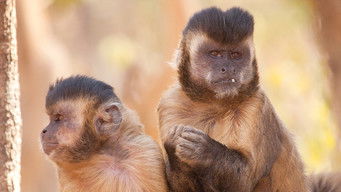 S34 · E15Nature's Perfect Partners 2016-05-11 · 53 min
It won’t come as any surprise that survival is the number one goal in the animal kingdom. But to ensure success on a continual basis, many creatures have opted to form alliances rather than go it alone. There are all kinds of partnerships to fulfill different needs, but as this film explains, these relationships are not only between animals of the same species. What is really astonishing is that completely unrelated species also form unlikely collaborations to succeed in the wild. Nature’s Perfect Partners travels around the world to profile an array of such animals who have joined forces.
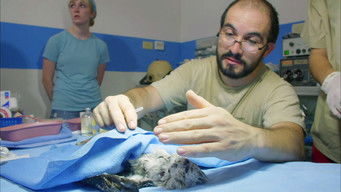 S34 · E16Jungle Animal Hospital 2016-05-18 · 53 min
Follow a veterinarian, zoologist and their team through a year at ARCAS, a rescue center deep in the Guatemalan jungle.
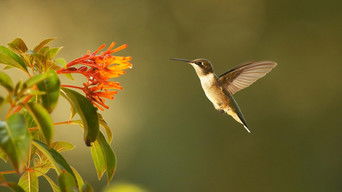 S35 · E1Super Hummingbirds 2016-10-12 · 53 min
With high speed camerawork and breakthrough new science, we enter the fast-paced world of hummingbirds as never before. Speed is their middle name. Their lives are moving faster than the eye can see. They possess natural born super powers that enable them to fly backwards, upside-down, and float in mid-air. And for the first time, we see them mate, lay eggs, fight, and raise families in intimate detail. They are great athletes, tender mothers, brave in combat, and up for any challenge. They are Super Hummingbirds, the smallest and most brilliant birds on earth.
 S35 · E2My Congo 2016-10-19 · 53 min
Vianet D'jenguet has lived half of his life in Europe, yet his heart still lies in his homeland, his Congo. As a successful wildlife cameraman, D'jenguet is returning to his roots to reveal the beauty and majesty of his country and its people. During his journey, D'jenguet explores a vibrant "African Eden" - a Congo complete with chimps, gorillas, weaver birds, Colobus monkeys, swamp antelopes, forest elephants and buffalo - and a jungle tribe who still reveres his great-grandfather. D'jenguet shines a spotlight on his beloved homeland and discovers an even deeper connection with this place than he ever imagined.
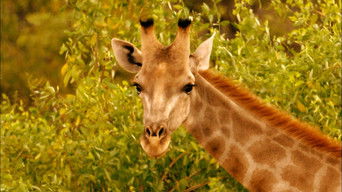 S35 · E3Giraffes: Africa's Gentle Giants 2016-10-26 · 53 min
Everyone loves giraffes, but what do we really know about them? Dr. Julian Fennessy has spent the last 20 years of his life studying giraffes. Now he's starting to reveal their secrets- the most important being that they are disappearing. The giraffe population in Africa is down by 40 percent in just two decades. In collaboration with a determined Ugandan Wildlife Authority team, Fennessy wants to round up 20 of the world's rarest giraffes to get them to safety through the wild heart of Uganda, which means embarking on a special voyage across the mighty Nile River. The stakes are high in this urgent and daring mission against poachers affiliated with organized crime, but if successful, the reward will be a brighter future for an animal we have somehow overlooked.
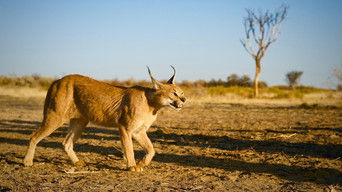 S35 · E4The Story of Cats: Asia to Africa 2016-11-02 · 53 min
Cats are among the most feared and revered creatures on the planet. Their power, strength, and enigmatic nature have fascinated us for centuries. They are one of the most studied mammals in the world yet only now is their real identity being understood - from their incredible hunting abilities, to their unique physiology and remarkable behaviors. With nearly 40 different species, thriving in almost any environment, the cat is one of the most successful predators since the dinosaurs. Using the latest camera technology and working with leading scientists, we are able to tell the story like never before. Join Nature in this epic two-part event as we journey across the globe tracking down the origins of these diverse creatures. Take an in-depth look at what makes the family of felines unique and the evolutionary tricks and adaptions that truly make a cat, a cat. In Part 1, discover how the first cats arose in the forests of Asia, how they spread across the continent and later came to conquer Africa. We reveal how cats evolved with an in-depth look at lions, servals, caracals, cheetahs, tigers, fishing and sand cats.
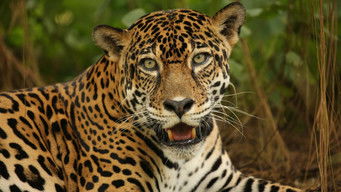 S35 · E5The Story of Cats: Into the Americas 2016-11-09 · 53 min
Cats are among the most feared and revered creatures on the planet. Their power, strength, and enigmatic nature have fascinated us for centuries. They are one of the most studied mammals in the world yet only now is their real identity being understood - from their incredible hunting abilities, to their unique physiology and remarkable behaviors. With nearly 40 different species, thriving in almost any environment, the cat is one of the most successful predators since the dinosaurs. Using the latest camera technology and working with leading scientists, we are able to tell the story like never before. Join Nature in this epic two-part event as we journey across the globe tracking down the origins of these diverse creatures. Take an in-depth look at what makes the family of felines unique and the evolutionary tricks and adaptions that truly make a cat, a cat. In Part 2, Track the story of cats into the Americas, from battles with their age-old rivals, the dog family, to the rise of domestic cats. Meet the mighty jaguar, the urban mountain lion, the curious ocelot, the Canada lynx, the nimble margay, the Siamese cat and the Sphynx.
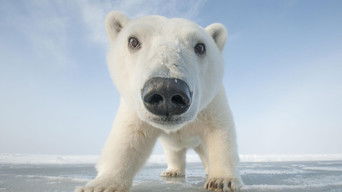 S35 · E6Snowbound: Animals of Winter 2017-01-11 · 53 min
The coldest and snowiest places on earth, such as the Arctic Circle or Antarctica, pose a challenge to human visitors. But what about the year-round animal population? How do they cope for many months with life in these frozen wonderlands where temperatures can plummet to as low as minus 50 degrees? Find out how these creature adapt to their surroundings or employ clever tactics to survive.
 S35 · E7Spy in the Wild: Love 2017-02-01 · 53 min
Spy Creatures explore the rarely seen emotions of animals, revealing if they are as strong and complex as our own. Join the “spycams” as they are accepted into a wild dog pack, witness elephant love, and are mourned by a troop of monkeys.
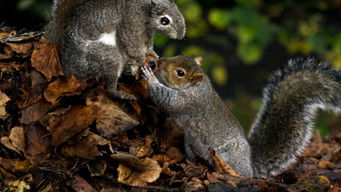 S35 · E8Spy in the Wild: Intelligence 2017-02-08 · 53 min
Spy Creatures infiltrate the world of animal intelligence, ingenuity, and creativity. Watch our spies disguised as animals observe a gray squirrel stealing Spy Nut, a sea otter cracking open a meal, and an orangutan washing with soap.
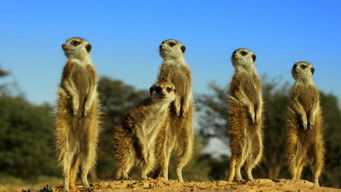 S35 · E9Spy in the Wild: Friendship 2017-02-15 · 53 min
Spy Creatures and their new wild friends rely on each other to look out for predators. A Spy Meerkat babysits meerkat pups while a Spy Cobra pretends to attack the mob. Spy Crocs witness a convenient partnership between real crocodiles and birds.
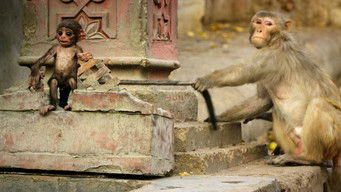 S35 · E10Spy in the Wild: Bad Behavior 2017-02-22 · 53 min
Spy Creatures infiltrate the underground world of animal mischief, crime, and retribution. Spy Monkey is caught between crossfires as real monkeys fight over beach bar alcohol. Spy Egret is also a waterhole victim when elephants throw mud everywhere.
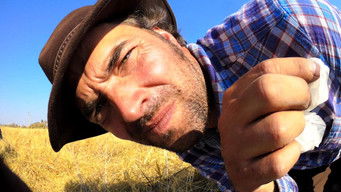 S35 · E11Spy in the Wild: Meet the Spies 2017-03-01 · 53 min
The final episode explains how the concept of the Spy Creatures evolved at John Downer Productions from the original Bouldercam to the Penguincams that inspired the next-generation “spycams” featured in this series. It shows the painstaking work that goes into building the lifelike models and how the team deploys and operates the robotic cameras on location all over the world.
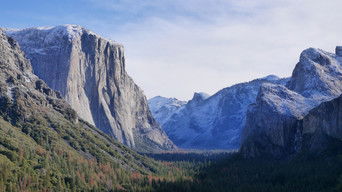 S35 · E12Yosemite 2017-03-29 · 53 min
The Sierra Nevada, a mountain range running about 400 miles along the eastern side of California and stretches into Nevada, is home to three national parks: Sequoia, Kings Canyon and Yosemite. This is a land of giants, whether speaking of trees soaring to nearly 300 feet, or massive stone monoliths far taller than any skyscraper. But the force that has given rise to the earth's largest living trees and carved out the iconic natural landmarks of the Sierras is water. The role that water has played in the creation and evolution of Yosemite Valley cannot be overstated - feeding its numerous wild rivers and countless waterfalls, and making life in this stone wilderness possible. The second force, crucial to the Giant sequoias' ability to reproduce, is fire. It is the delicate balance of these two elements, water and fire, that is vital to the continued existence of the wildlife and trees that inhabit the Sierras. Despite the recent heavy rains and snowfall, scientists are finding that water is scarcer and the threat of fire is more likely as the area continues to experience rising temperatures upsetting that important balance. Geologists, ecologists, researchers and adventurers investigate how the changing climate is affecting one of America's greatest wildernesses.