
Seasons & episodes
 S3 · E2Attack over Baghdad 2005-09-21 · 45 min
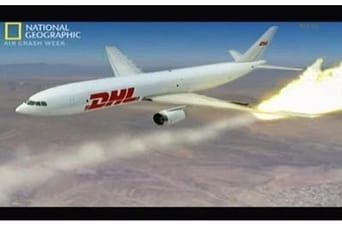
On 22 November 2003, a European Air Transport Airbus A300 operating on behalf of DHL is climbing away from Baghdad International Airport, when the left wing explodes, causing a massive loss of hydraulic fluid which immobilizes the flight control surfaces. The crew flies the aircraft by changing the engines' thrust for control and make a safe landing 16 minutes later. A surface-to-air missile had been launched at the aircraft.
 S3 · E3Out of Control 2005-09-28 · 45 min
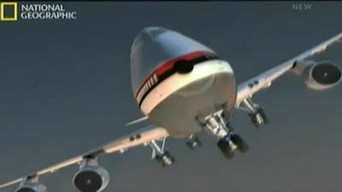
On 12 August 1985, the rear pressure bulkhead bursts on a Boeing 747SR operating as Japan Airlines Flight 123, destroying the vertical stabilizer and severing all four of the aircraft's hydraulic systems. The crew manages to keep the aircraft flying for 32 minutes until it clips Mount Osutaka and crashes, killing all but four people out of the 524 passengers and crew aboard.
 S3 · E4Fight for Your Life 2005-10-05 · 45 min
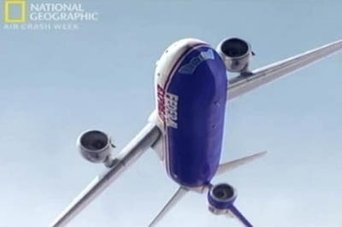
On 7 April 1994, Auburn Calloway, a disgruntled employee, attempts to hijack Federal Express Flight 705 armed with hammers and a speargun. Despite sustaining serious injuries, the crew successfully subdues Calloway and returns the aircraft safely to Memphis International Airport.
 S3 · E5Bomb on Board 2005-10-12 · 45 min
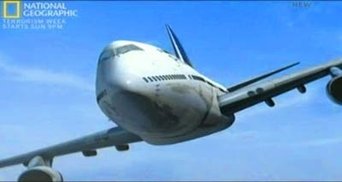
On 11 December 1994, a bomb explodes on Philippine Airlines Flight 434 on the second leg of a service from Manila to Tokyo via Cebu City, killing a passenger, injuring many and damaging some of the aircraft's control systems. The crew successfully lands the aircraft at Naha Airport in Okinawa. Ramzi Yousef, a terrorist, smuggled the bomb aboard the aircraft on the first leg of its flight.
 S3 · E6Mistaken Identity 2005-10-19 · 45 min
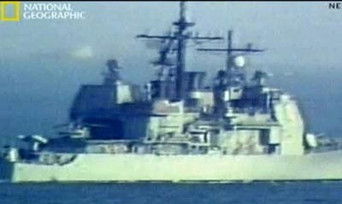
On 3 July 1988, during the Iran–Iraq War, the USS Vincennes launches missiles which bring down Iran Air Flight 655, killing all 290 people on board. The crew of the Vincennes claimed that, despite its high-tech equipment, it mistook the airliner for an Iranian Air Force Grumman F-14 Tomcat fighter. Iran believes that the US deliberately shot down its civilian airliner.
 S3 · E7Helicopter Down 2005-10-26 · 45 min
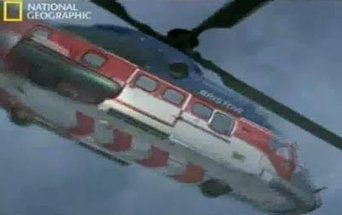
On 19 January 1995, the crew of Bristow Flight 56C is forced to perform an emergency autorotation to a ditching in the sea, after lightning damages the tail rotor of their helicopter. Despite the rough sea conditions, the 16 oil rig workers and pilots are rescued by nearby ships.
 S3 · E8Death and Denial 2005-11-02 · 45 min
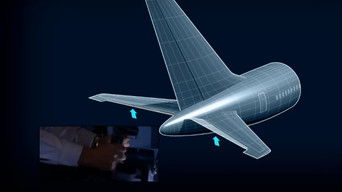
On 31 October 1999, EgyptAir Flight 990, from New York to Cairo, Egypt, dives out of the sky and crashes into the ocean, killing all 217 people on board. The cause of the crash is disputed: the Egyptian government claims mechanical failure associated with the elevator controls caused the crash, but the US government claims the aircraft was deliberately crashed by the Relief First Officer Gameel Al-Batouti in a suicide/homicide.
 S3 · E9Kid in the Cockpit 2005-11-09 · 45 min
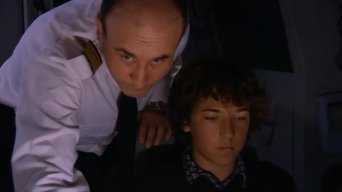
On 23 March 1994, Aeroflot Flight 593 is en route to Hong Kong, when it stalls and crashes, killing all 75 people on board. The pilot's 15-year-old son accidentally disabled the autopilot while in the captain's seat, causing the aircraft to bank heavily to the right, inducing the stall.
 S3 · E10Head On Collision 2005-11-16 · 45 min
On 8 February 1986, a Via Rail passenger train and a 118-car Canadian National Railway freight train collide, killing 23 people. The freight train crew did not stop at a red railway signal on a section of a passing loop, possibly because they were asleep. Note: This is a Crash Scene Investigation episode.
 S3 · E11Collision Course 2005-11-23 · 45 min
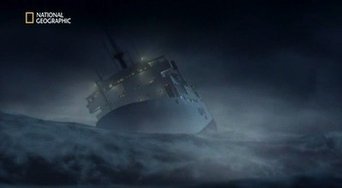
On 26 September 2000, waves push the MS Express Samina off course, causing it to hit a group of rocks off Paros and sink, killing 80 people. The ferry was on autopilot, with the crew not monitoring the ship's course. They were instead watching an association football match. Note: This is a Crash Scene Investigation episode.
 S3 · E12Runaway Train 2011-11-30 · 45 min
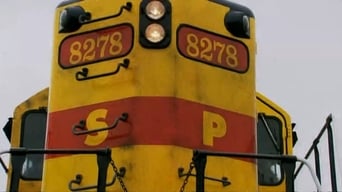
On 12 May 1989, a 69-car freight train goes out of control while descending from California's Cajon Pass. It derails in a residential neighbourhood of San Bernardino after reaching speeds in excess of 100 miles per hour (160 km/h). Two residents and two train crew members are killed in the initial crash. More than a week later, an underground gasoline pipeline, damaged by earth-moving equipment during the post-crash clean-up, ruptures and sparks a fire that kills another two people. A clerical error had caused the train's weight to be greatly underestimated, and it had been assembled without enough locomotives to provide adequate braking. Additionally, several of the engines had completely inoperable brakes, but this information was not passed on to the crews. Note: This is a Crash Scene Investigation episode.
 S3 · E13Ocean Landing 2005-12-07 · 45 min
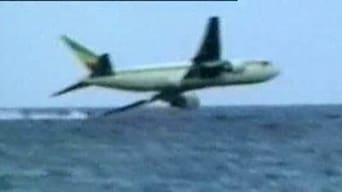
On 23 November 1996, Ethiopian Airlines Flight 961 is forced to ditch after running out of fuel. The aircraft breaks up as the wings hit the water, killing 125 people. The aircraft had been hijacked and ran out of fuel because the hijackers did not believe the pilot's insistence that there was not enough fuel aboard to make it to the hijackers' planned destination: Australia.
 S4 · E1Miracle Escape (Air France Flight 358) 2007-04-15 · 45 min
On 2 August 2005, Air France Flight 358 overruns the runway while attempting to land in a storm. The Airbus A340 travels through the airport perimeter fence into a small ravine and catches fire. The causes of the crash were the aircraft deviating above the required approach path for its landing, touching down too far along the runway and the crew deploying the thrust reversers too slowly. All 309 passengers and crew survived. Alternate title: "Desperate Escape"
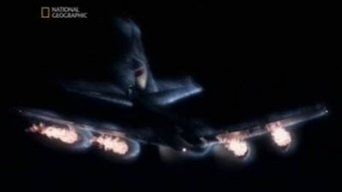 S4 · E2Falling from the Sky (British Airways Flight 9) 2007-04-22 · 45 min
On 24 June 1982, British Airways Flight 9 experiences St. Elmo's fire en route from Kuala Lumpur, Malaysia, to Perth, Australia. A few minutes later, all four engines flame out. After descending, the crew successfully restarts the engines and lands safely. The St. Elmo's fire and engine flame-outs were caused by volcanic ash spewed by Galunggung in Indonesia during a major eruption.
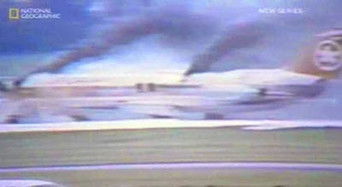 S4 · E3Fire Fight (Air Canada Flight 797) 2007-04-29 · 45 min
On 2 June 1983, a fire breaks out on Air Canada Flight 797 in the aircraft's toilet. An emergency landing is made in Cincinnati, but the aircraft is engulfed by flames on the runway, killing 23 people, including musician Stan Rogers. The opening of the aircraft's doors after the landing caused a flashover.
 S4 · E4Missed Approach (Korean Air Flight 801) 2007-05-06 · 45 min
On 6 August 1997, the crew of Korean Air Flight 801 is unable to see the runway during final approach for a night landing in Guam. They initiate a missed approach, but the aircraft then flies into a low hill, killing 228 people. A combination of pilot error and the instrument landing system at Guam airport being temporarily out of service for maintenance work were blamed. AKA : Final Approach
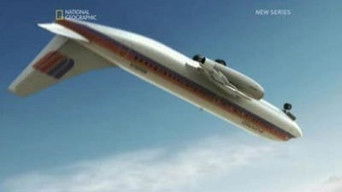 S4 · E5Hidden Danger (United Airlines 585, USAir 427 and Eastwind Airlines 517) 2007-05-13 · 45 min
On 3 March 1991, a Boeing 737 operating as United Airlines Flight 585 is on approach to land, when it suddenly rolls into a dive and crashes within eight seconds, killing all 25 people on board. On 8 September 1994, USAir Flight 427 is another Boeing 737 on approach to land, when it rolls and crashes within thirty seconds, killing all 132 people on board. On 9 June 1996, Eastwind Airlines Flight 517 is another Boeing 737 that unexpectedly rolls in similar circumstances, but the crew successfully regains control of the aircraft and lands safely. The cause of all three incidents was the rudder experiencing a "hardover" (suddenly going to full deflection) and jamming due to thermal shock of the hydraulic control valve.
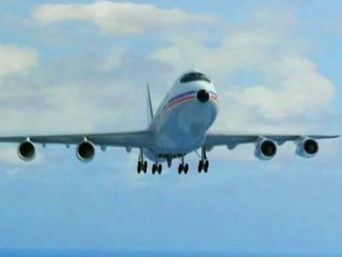 S4 · E6Panic Over The Pacific (China Airlines Flight 006) 2007-05-20 · 45 min
On 19 February 1985, China Airlines Flight 006's number four (right-side outer) engine flames out. As the crew tries to restart the engine, the Boeing 747SP stalls and enters into a spin. The crew successfully regains control, restarts the engine and lands safely at San Francisco International Airport. The incident was caused by pilot error. Alternate title: "6 Mile Plunge"
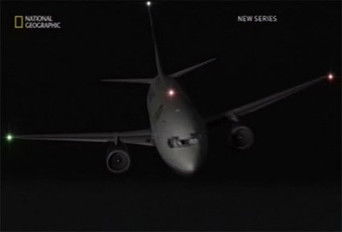 S4 · E7Out Of Sight (1986 Cerritos mid-air collision) 2007-05-27 · 45 min
On 31 August 1986, Aeroméxico Flight 498, a McDonnell Douglas DC-9, and a light aircraft collide over Cerritos, California, causing both to go out of control and crash, killing 82 people. The accident was caused by neither pilot making visual contact with the other aircraft and a lack of automated collision warning systems. The crash inspires the creation of the traffic collision avoidance system.
 S4 · E8Fog of War (1996 Croatia USAF CT-43) 2007-06-03 · 45 min
On 3 April 1996, while attempting to land at Dubrovnik Airport in Croatia during heavy fog, a United States Air Force Boeing CT-43 strays off course and flies into a mountain. All 35 people on board are killed, including the United States Secretary of Commerce, Ron Brown. The non-precision approach procedure the crew needed to follow required the use of two automatic direction finders, but the aircraft was only fitted with one.
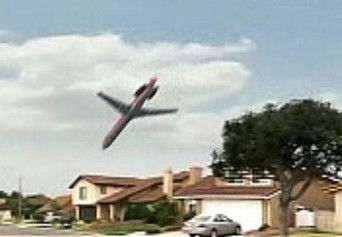 S4 · E9Vertigo 2007-06-10 · 45 min
On 3 January 2004, Flash Airlines Flight 604 banks to the right just after takeoff and crashes into the Red Sea, killing all 148 people on board. The cause of this disaster is disputed and suggested to be spatial disorientation on the part of the flight crew.
 S4 · E10Ghost Plane (Helios Airways Flight 522) 2007-06-17 · 45 min
On 14 August 2005, air traffic controllers lose radio contact with Helios Airways Flight 522. Two fighters from the Hellenic Air Force intercept and investigate the flight and find all but one person on board not moving. A few moments later, the aircraft runs out of fuel and crashes, killing all 121 people on board. An incorrect setting on the cabin pressurization panel caused the pilots and everyone else on board to succumb to hypoxia.
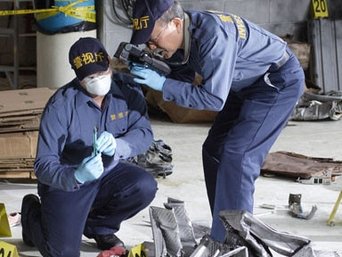 S5 · E1Explosive Evidence (Air India Flight 182) 2008-04-09 · 45 min
On 23 June 1985, Air India Flight 182 explodes in mid-air and disintegrates over the coast of Ireland, killing all 329 passengers and crew members on board. Investigators discovered that a bomb from Sikh militant group Babbar Khalsa caused the explosion.
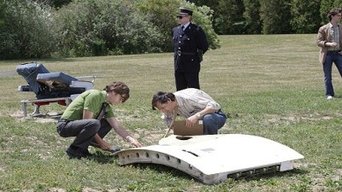 S5 · E2Behind Closed Doors (American Airlines Flight 96 and Turkish Airlines Flight 981) 2008-04-16 · 45 min
On 12 June 1972, a McDonnell Douglas DC-10, just a few months old, operating as American Airlines Flight 96 from Detroit, Michigan, to Buffalo, New York, suffers an explosive decompression after a cargo door in the lower rear fuselage bursts open. The crew makes an emergency landing at Detroit without any loss of life. Two years later, on 3 March 1974, Turkish Airlines Flight 981 suffers a similar sequence of events during a flight from Paris to London. This time, the DC-10's hydraulic systems are damaged enough that the crew loses control, and the aircraft crashes in a forest near Senlis outside Paris, killing all 346 on board. At the time, it was the worst aviation disaster in history. A design fault with the cargo door mechanism was not rectified after the first accident, and the second DC-10's door opened during flight, causing the crash.