
Seasons & episodes
 S21 · E6We Shall Remain (2): Tecumseh's Vision 2009-04-20 · 55 min
In the spring of 1805, Tenskwatawa (actor Billy Merasty, Cree First Nation), a Shawnee, fell into a trance so deep that those around him believed he had died. When he finally stirred, the young prophet claimed to have met the Master of Life. He told those who crowded around to listen that the Indians were in dire straits because they had adopted white culture and rejected traditional spiritual ways.
 S21 · E7We Shall Remain (3): Trail of Tears 2009-04-27 · 55 min
The Cherokee would call it Nu-No-Du-Na-Tlo-Hi-Lu, “The Trail Where They Cried.” On May 26, 1838, federal troops forced thousands of Cherokee from their homes in the Southeastern United States, driving them toward Indian Territory in Eastern Oklahoma. More than 4,000 died of disease and starvation along the way.
 S21 · E8We Shall Remain (4): Geronimo 2009-05-04 · 55 min
In February of 1909, the indomitable Chiricahua Apache medicine man Geronimo lay on his deathbed. He summoned his nephew to his side, whispering, “I should never have surrendered. I should have fought until I was the last man alive.” It was an admission of regret from a man whose insistent pursuit of military resistance in the face of overwhelming odds confounded not only his Mexican and American enemies, but many of his fellow Apaches as well.
 S21 · E9We Shall Remain (5): Wounded Knee 2009-05-11 · 55 min
On the night of February 27, 1973, fifty-four cars rolled, horns blaring, into a small hamlet on the Pine Ridge Indian Reservation. Within hours, some 200 Oglala Lakota and American Indian Movement (AIM) activists had seized the few major buildings in town and police had cordoned off the area. The occupation of Wounded Knee had begun. Demanding redress for grievances—some going back more than 100 years—the protesters captured the world's attention for 71 gripping days.
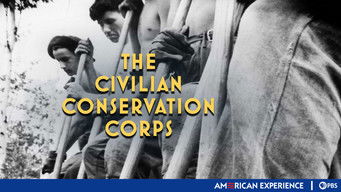 S22 · E1The Civilian Conservation Corps 2009-11-02 · 55 min
One of the most popular New Deal programs, the Civilian Conservation Corps put three million young men to work in the nation's forests and parks at the height of the Great Depression.
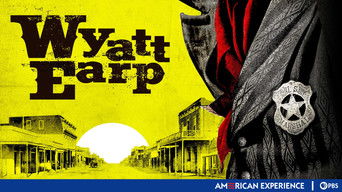 S22 · E2Wyatt Earp 2010-01-25 · 55 min
Wyatt Earp has been portrayed in countless movies and television shows by some of Hollywood's greatest actors, including Henry Fonda, Jimmy Stewart, and more recently, Kevin Costner, but these popular fictions often belie the complexities and flaws of a man whose life is a lens on politics, justice and economic opportunity in the American frontier.
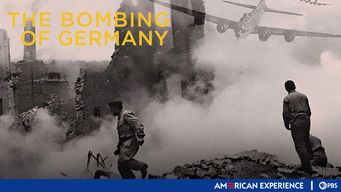 S22 · E3The Bombing of Germany 2010-02-08 · 55 min
From International Emmy Award and Peabody Award-winning producer Zvi Dor-Ner (Israel’s Next War, House of Saud) comes The Bombing of Germany, a one-hour film that examines the defining moments of the U.S. bombing campaign. Weaving together veteran and historian interviews with archival footage of the bombing and its aftermath, The Bombing of Germany is a haunting reminder of the moral dilemma imposed by war’s strategic imperatives.
 S22 · E4Dolley Madison 2010-03-01 · 55 min
Dolley Madison lived through the two wars that established the U.S., was friends with the first 12 Presidents, and watched America evolve from a struggling young republic to the first modern democracy in the world. She was nicknamed “Queen Dolley,” and when she died in 1849 at the age of 81 — one of the last remaining members of the founding generation - Washington City honored her with the largest state funeral the capital had ever seen for a woman. Dolley Madison features Tony Award-nominee Eve Best (Nurse Jackie) as Dolley Madison and Tony Award-winner Jefferson Mays as James Madison (I Am My Own Wife).
 S22 · E5Earth Days 2010-04-19 · 55 min
Earth Days looks at the road to April 22, 1970, to the dawn and development of the modern environmental movement through the extraordinary stories of the era’s pioneers — among them Former Secretary of the Interior Stewart Udall, biologist/Population Bomb author Paul Ehrlich, Whole Earth Catalog founder Stewart Brand, Apollo Nine astronaut Rusty Schweickart, and renewable energy pioneer Hunter Lovins. Earth Days is a meditation on man’s complex relationship with nature and an engaging history of the revolutionary achievements and missed opportunities of groundbreaking eco-activism.
 S22 · E6My Lai 2010-04-26 · 55 min
What drove a company of American soldiers — ordinary young men from around the country — to commit the worst atrocity in American military history? American Experience focuses on the 1968 My Lai massacre, its subsequent cover-up, and the heroic efforts of the soldiers who broke ranks to try to halt the atrocities and then bring them to light.
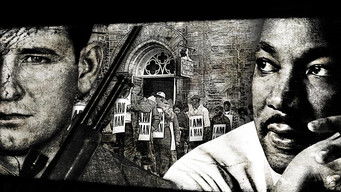 S22 · E7Roads to Memphis 2010-05-03 · 55 min
On April 4, 1968, James Earl Ray shot and killed Dr. Martin Luther King. This is the fateful narrative of the killer and his prey, set against the seething, turbulent forces in American society. Roads to Memphis is told through eyewitness testimony from King's inner circle and the officials involved in Ray’s capture and prosecution following an intense two-month international manhunt.
 S22 · E8Into the Deep: America, Whaling and the World 2010-05-10 · 55 min
The 300-year saga of the American whaling industry, from its origins off the coast of New England, through the age of deep ocean whaling, and on to its demise in the decades following the Civil War.
 S23 · E1God in America (Parts 1–2) 2010-10-11 · 55 min
A New Adam explores the origins of Christian religion in America and examines how the New World changed the faiths that the settlers brought with them. A New Eden explores how an unlikely alliance between evangelical Baptists and enlightenment figures like Thomas Jefferson served as the foundation of American religious liberty.
 S23 · E2God in America (Parts 3-4) 2010-10-12 · 55 min
During the 19th century, the forces of modernity challenged traditional faith and drove a wedge between liberal and conservative believers.
 S23 · E3God in America (Parts 5-6) 2010-10-13 · 55 min
Hour five explores the post-World War II era, when rising evangelist Billy Graham tried to inspire a religious revival that fused faith with patriotism in a Cold War battle with Godless Communism.
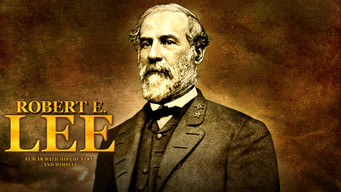 S23 · E4Robert E. Lee 2011-01-03 · 55 min
Robert E. Lee, the leading Confederate general of the American Civil War, remains a source of fascination and, for some, veneration. Few public figures have ever held a such a firm grip on the American popular imagination. Grant was a man whose rise from obscurity made him a hero to millions who could see themselves in him. An ordinary man who faced and met extraordinary challenges, his successes and failures seemed to encapsulate the national character. He was so popular with the American public that, despite his two scandal-ridden terms as president, he was nearly nominated to run for a third term.
 S23 · E5Dinosaur Wars 2011-01-17 · 55 min
From PBS and American Experience - In the summer of 1868, paleontologist Othniel Charles Marsh boarded a Union Pacific train for a sightseeing excursion through the heart of the newly opened American West. While most passengers simply saw magnificent landscapes, Marsh soon realized he was traveling through the greatest dinosaur burial ground of all time.
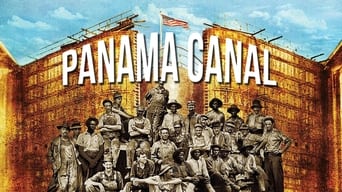 S23 · E6Panama Canal 2011-01-24 · 55 min
In 1914, the Panama Canal connected the world’s two largest oceans. American ingenuity and innovation had succeeded where the French had failed disastrously, but the U.S. paid a price for victory.
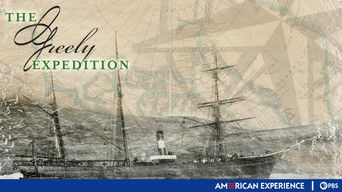 S23 · E7The Greely Expedition 2011-01-31 · 55 min
In 1881, 25 men led by Adolphus Greely set sail from Newfoundland to Lady Franklin Bay in the high Arctic, where they planned to collect a wealth of scientific data from a vast area of the world’s surface that had been described as a "sheer blank." Three years later, only six survivors returned, with a daunting story of shipwreck, starvation, mutiny and cannibalism. The film reveals how poor planning, personality clashes, questionable decisions and pure bad luck conspired to turn a noble scientific mission into a human tragedy.
 S23 · E8Triangle Fire 2011-02-28 · 55 min
It was the deadliest workplace accident in New York City’s history. A dropped match on the 8th floor of the Triangle Shirtwaist Factory sparked a fire that killed over a hundred innocent people trapped inside. The private industry of the American factory would never be the same.
 S23 · E9The Great Famine 2011-04-11 · 55 min
The little-known story of the American effort to relieve starvation in the new Soviet Russia in 1921, The Great Famine is a documentary about the worst natural disaster in Europe since the Black Plague in the Middle Ages. Five million Soviet citizens died. Half a world away, Americans responded with a massive two-year relief campaign, championed by Herbert Hoover, director of the American Relief Administration.
 S23 · E10Stonewall Uprising 2011-04-25 · 55 min
In 1969, homosexuality was illegal in almost every state... but that was about to change. The Stonewall riots marked a major turning point in the modern gay civil rights movement. When police raided the Stonewall Inn, a popular gay bar in the Greenwich Village section of New York City on June 28, 1969, the street erupted into violent protests that lasted for the next six days. The Stonewall riots, as they came to be known, marked a major turning point in the modern gay civil rights movement in the United States and around the world.
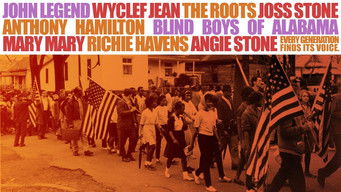 S23 · E11Soundtrack for a Revolution 2011-05-09 · 55 min
The story of the American civil rights movement told through the freedom songs protesters sang on picket lines, in mass meetings, in paddy wagons and in jail cells as they fought for justice and equality. The music enabled African-Americans to sing words they could not say and helped protesters face brutal aggression with dignity. With heart-wrenching interviews, dramatic images and contemporary performances by top artists, including John Legend, Joss Stone, Wyclef Jean and The Roots.
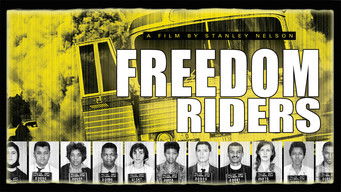 S23 · E12Freedom Riders 2011-05-16 · 55 min
They called themselves the Freedom Riders, and they managed to bring the president and the entire American public face to face with the challenge of correcting civil-rights inequities that plagued the nation. Veteran filmmaker Stanley Nelson’s inspirational documentary is the first feature-length film about this courageous band of civil-rights activists. Gaining impressive access to influential figures on both sides of the issue, Nelson chronicles a chapter of American history that stands as an astonishing testament to the accomplishment of youth and what can result from the incredible combination of personal conviction and the courage to organize against all odds.