
Seasons & episodes
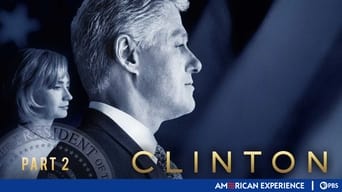 S24 · E4Clinton: The Survivor (2) 2012-02-21 · 55 min
The conclusion of the Bill Clinton biography recalls the Monica Lewinsky scandal, which led to Clinton becoming the second U.S. president to be impeached. It also details his face-off over the federal budget with Newt Gingrich, whose refusal to compromise led to a government shutdown, and successful 1996 reelection campaign. Among those commenting: Whitewater independent counsel Kenneth Starr; Paula Jones' attorney James Fisher; and White House counsel Bernard Nussbaum.
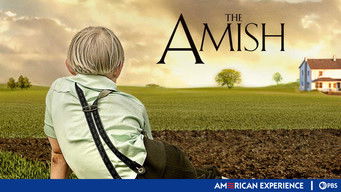 S24 · E5The Amish 2012-02-28 · 55 min
The first documentary to deeply penetrate and explore this profoundly attention-averse group, The Amish answers many questions Americans have about this insistently insular religious community, whose intense faith and adherence to 500-year-old traditions have by turns captivated and repelled, awed and irritated, inspired and confused for more than a century.
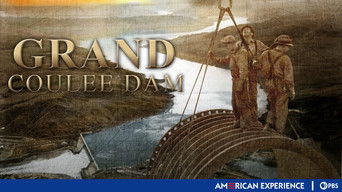 S24 · E6Grand Coulee Dam 2012-04-03 · 55 min
Featuring the men and women who lived and worked at Grand Coulee in the wake of the Great Depression and the Native people whose lives were changed alongside historians and engineers, this film explores how the tension between technological achievement and environmental impact hangs over the project's legacy.
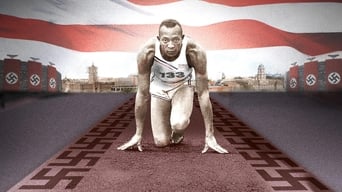 S24 · E7Jesse Owens 2012-05-01 · 55 min
Despite Jesse Owens' remarkable victories in the face of Nazi racism at the 1936 Berlin Olympics, the athlete struggled to find a place for himself in a United States that was still wrestling to overcome its own deeply entrenched bias.
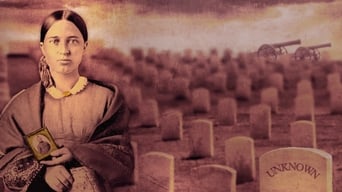 S24 · E8Death and the Civil War 2012-09-18 · 55 min
With the coming of the Civil War, and the staggering casualties it ushered in, death entered the experience of the American people as it never had before -- permanently altering the character of the republic and the psyche of the American people. Contending with death on an unprecedented scale posed challenges for which there were no ready answers when the war began. Americans worked to improvise new solutions, new institutions, and new ways of coping with death on an unimaginable scale.
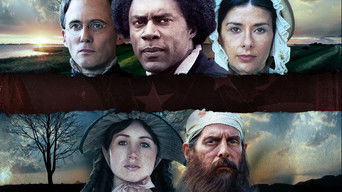 S25 · E1The Abolitionists: 1820s-1838 2013-01-08 · 55 min
The story of how abolitionist allies William Lloyd Garrison, Frederick Douglass, Harriet Beecher Stowe, John Brown and Angelina Grimke turned a despised fringe movement against chattel slavery into a force that literally changed the nation.
S25 · E2The Abolitionists: 1838-1854 2013-01-15 · 55 min
See how the activities of the five principals intersect and affect the anti-slavery movement.
S25 · E3The Abolitionists: 1854-Emancipation and Victory 2013-01-22 · 55 min
Examine the forces leading to war and to the ratification of the Thirteenth Amendment.
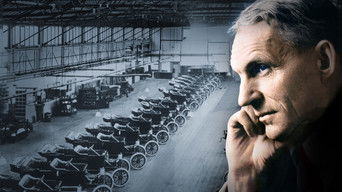 S25 · E4Henry Ford 2013-01-29 · 55 min
An absorbing life story of a farm boy who rose from obscurity to become the most influential American innovator of the 20th century, Henry Ford offers an incisive look at the birth of the American auto industry with its long history of struggles between labor and management, and a thought-provoking reminder of how Ford's automobile forever changed the way we work, where we live, and our ideas about individuality, freedom, and possibility.
 S25 · E5Silicon Valley 2013-02-05 · 55 min
Led by physicist Robert Noyce, Fairchild Semiconductor began as a start-up company whose radical innovations would help make the United States a leader in both space exploration and the personal computer revolution, changing the way the world works, plays, and communicates. Noyce's invention of the microchip ultimately re-shaped the future, launching the world into the Information Age.
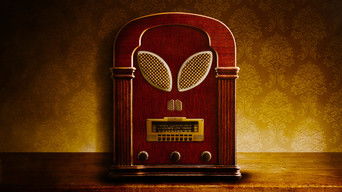 S25 · E6War of the Worlds 2013-10-29 · 55 min
A broadcast that struck fear into an already anxious nation, Orson Welles' War of the Worlds radio broadcast was the most famous alien invasion that never happened.
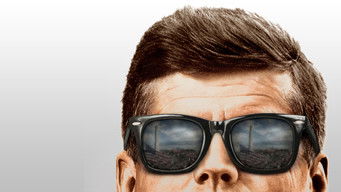 S25 · E7JFK (Part 1) 2013-11-11 · 55 min
A two-part profile of John F. Kennedy begins with his early years, detailing the health challenges he faced; his heroism after his PT boat was hit by an enemy destroyer during World War II; his first run for Congress; and the 1960 presidential race, which featured the first televised presidential debates. Among those sharing insights are his sister Jean Kennedy Smith and niece Kathleen Kennedy Townsend; presidential biographers Robert A. Caro and Robert Dallek; and historian David Nasaw.
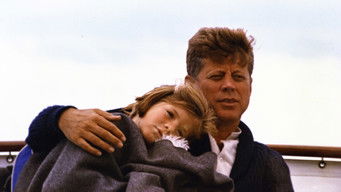 S25 · E8JFK (Part 2) 2013-11-12 · 55 min
Conclusion. John F. Kennedy's White House years, including the Bay of Pigs fiasco; Cuban Missile Crisis; handling of civil rights; and decision to travel to Dallas on Nov. 22, 1963, to shore up support for the 1964 election. The successes and failures of his tenure in office are also weighed by Kennedy administration officials John Seigenthaler, Thomas Hughes and Harris Wofford; civil-rights leaders Andrew Young and Julian Bond; and journalists Evan Thomas and Richard Reeves.
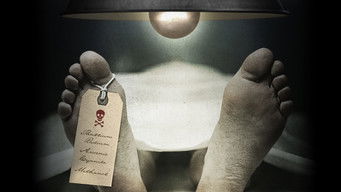 S26 · E1The Poisoner's Handbook 2014-01-07 · 55 min
The story of New York City's first medical examiner, Charles Norris (1867-1935), and his chief toxicologist, Alexander Gettler (1883-1968), who pioneered the use of forensic science to explain violent and suspicious deaths. Included are remarks from renowned medical examiners Marcella Fierro and Michael Baden and author Deborah Blum ("The Poisoner's Handbook"). Oliver Platt narrates.
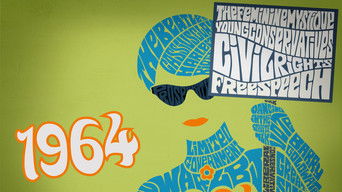 S26 · E21964 2014-01-14 · 55 min
Recalling 1964, a pivotal year in U.S. history. While the Beatles captured the imaginations of the nation's youth, President Lyndon B. Johnson signed the Civil Rights Act, unveiled his vision of a "Great Society" and squared off against Barry Goldwater in the presidential election. Also covered: the murders of three Freedom Summer volunteers; and the influence of Betty Friedan's "The Feminine Mystique." Based in part on Jon Margolis' "The Last Innocent Year: America in 1964."
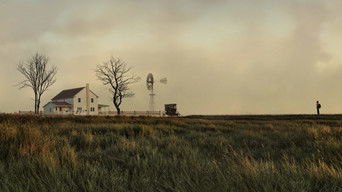 S26 · E3The Amish: Shunned 2014-02-04 · 55 min
The Amish practice of shunning those who leave their faith is explored through the experiences of individuals who have left their communities. Also: faithful Amish men and women share the heartbreak they feel when a loved one leaves.
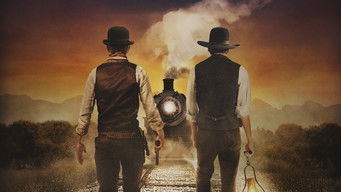 S26 · E4Butch Cassidy & the Sundance Kid 2014-02-11 · 55 min
The story of outlaws Butch Cassidy and the Sundance Kid, whose turn-of-the-century exploits made headlines, led them to be pursued by Pinkerton detectives and inspired the popular 1969 film starring Paul Newman and Robert Redford.
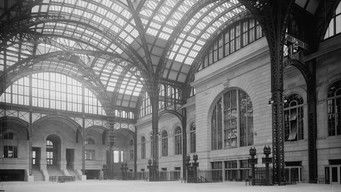 S26 · E5The Rise and Fall of Penn Station 2014-02-18 · 55 min
The story of New York's Pennsylvania Station, which opened to the public in 1910. One of the greatest architectural and engineering achievements of its time, it covered nearly eight acres and required the construction of 16 miles of underground tunnels. It closed its doors some 50 years later, giving way to Madison Square Garden, a high-rise office building and sports complex.
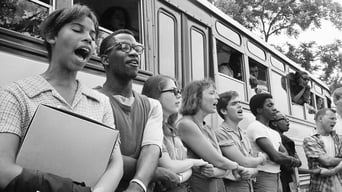 S26 · E6Freedom Summer 2014-06-24 · 55 min
Recalling the summer of 1964 in Mississippi, when student volunteers from around the country joined local activists in an effort to register to vote as many African-Americans as possible. (Due to intimidation and arcane tests, less than seven percent of the state's African-Americans were registered.) Activists also set up schools to teach children about African-American history; and created a rival Democratic Party to challenge the all-white delegation to the 1964 Democratic National Convention.
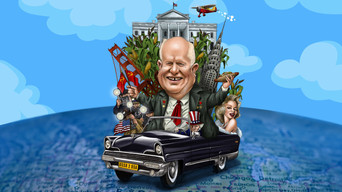 S26 · E7Cold War Roadshow 2014-11-18 · 55 min
In 1959, at the very height of the Cold War, with American schoolchildren practicing duck-and-cover drills, Soviet leader Nikita Khrushchev, the man who Americans feared could incinerate them in a rain of hydrogen bombs arrived in Washington, D.C. at the invitation of President Eisenhower. For both men, the visit was an opportunity to halt the escalating threats of the Cold War and chart a new course toward peaceful coexistence
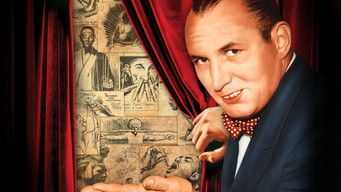 S27 · E1Ripley: Believe It or Not 2015-01-06 · 55 min
Robert Ripley's obsession with the odd and keen eye for the curious made him one of the most successful men in America during the Great Depression. Over three decades, his Believe It or Not! franchise grew into an entertainment empire, expanding from newspapers to radio, film and, ultimately, television. Americans not only loved his bizarre fare, but were fascinated by the man himself, and the eccentric, globetrotting playboy became an unlikely national celebrity. This is the story of the man who popularized the iconic phrase, and proof of why we still can’t resist his challenge to “Believe it — or not!”
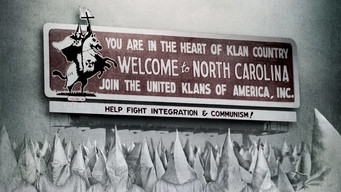 S27 · E2Klansville, USA 2015-01-13 · 55 min
The rise of the Ku Klux Klan in North Carolina during the 1960s is recalled. In 1963, Bob Jones Sr. started the state's chapter for the racist organization, and grew its membership to more than 10,000 within three years. Included: remarks from sociologist David Cunningham, whose book "Klansville, USA" the documentary is partially based on; historians David Cecelski and Gary Freeze; the Southern Poverty Law Center's Mark Potok; and journalist Patsy Sims, author of "The Klan."
 S27 · E3Edison 2015-01-27 · 55 min
EDISON explores the complex alchemy that accounts for the enduring celebrity of America's most famous inventor, offering new perspectives on the man and his milieu, and illuminating not only the true nature of invention, but its role in turn-of-the-century America's rush into the future.
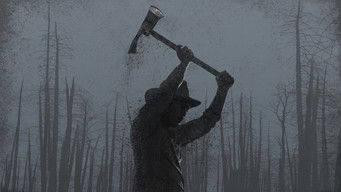 S27 · E4The Big Burn 2015-02-03 · 55 min
In the summer of 1910, hundreds of wildfires raged across the Northern Rockies. By the time it was all over, more than three million acres had burned and at least 78 firefighters were dead. It was the largest fire in American history.