
Seasons & episodes
S4 · E3The Massachusetts 54th Colored Infantry 1991-10-07 · 55 min
The first officially formed regiment of northern black soldiers who fought in the Civil War, the 54th's roster included shopkeepers, clerks, cobblers and seamen. They knew the eyes of the nation would be on them at a time when many whites insisted that black soldiers were too cowardly to fight. By the war's end, 180,000 black troops filled the Union ranks.
S4 · E4Scandalous Mayor 1991-10-28 · 55 min
James Michael Curley dominated Boston's politics for almost half a century, building a sophisticated political machine based on rhetoric, old-fashioned patronage and sheer personal will. In 1903, he ran a campaign from jail and won; he overpowered opponents with charisma and intelligence, and if that didn't work, he smeared them. Curley's colorful, combative style seized the imagination of the community because he thumbed his nose at the Yankee establishment.
S4 · E5The Johnstown Flood 1991-11-04 · 55 min
By an abandoned earthen dam, at a mountain resort 14 miles up the valley, the leaders of industry and their families created an exclusive summer retreat. But the structure of the dam was fatally flawed. On May 31, 1889, after steady spring rains, it broke without warning, and this small city in Pennsylvania was swept away in a wall of water over 30 feet high. More than two thousand people lost their lives; thousands were left homeless.
S4 · E6Pearl Harbor: Surprise and Remembrance 1991-11-11 · 55 min
The shock of what happened on December 7, 1941 has made Pearl Harbor a synonym for deceit and unpreparedness. Produced for the 50th anniversary, this examination of events shows the attack could have been foreseen -- the US and Japan had been on a collision course for years. A minute-by-minute account, on both sides of the Pacific, leading up to the surprise attack that Sunday morning.
S4 · E7G-Men: The Rise of J. Edgar Hoover 1992-02-24 · 55 min
The rise of the FBI from a minor government bureaucracy to the premiere law enforcement agency in the world under the controversial leadership of J. Edgar Hoover.
S4 · E8Duke Ellington: Reminiscing in Tempo 1991-12-09 · 55 min
At a time when black and white musicians rarely performed together, when black musicians were exploited by record companies, Ellington was an international star. He made the Cotton Club his showcase for original jazz compositions, some of the most exiting music America had ever heard. Underscored with more than 40 Ellington pieces.
S4 · E9The Quiz Show Scandal 1992-01-06 · 55 min
When CBS premiered The $64,000 Question in 1955, the show was more than a hit; it was a national phenomenon. More quiz shows followed. What the audience was to learn, much later, was that many of these shows were fixed. Slowly, painfully, the deceit unravelled. A look at the formative years of television and the scandal's impact on the TV business and a naive America.
S4 · E10Love in the Cold War 1992-01-13 · 55 min
Eugene Dennis fled to Moscow to avoid indictment and prison for his work for the American Communist Party in the late 1920s; his wife Peggy and 18-month-old son soon followed. In 1935, they were reassigned to America but ordered to leave behind their five-year-old who spoke only Russian. A second son, born in America, offers an honest and touching examination of the lives of his parents, whose political beliefs tore the family apart.
S4 · E11Wild by Law 1992-02-10 · 55 min
For years there was no federal law to protect the shrinking wilderness from encroaching industry and tourism, until three men dedicated their lives to finding a remedy. Robert Marshall, Aldo Leopold, the prophet of the modern environmental movement, and Howard Zahniser struggled for decades to create a permanent system of federally protected wilderness areas. The fruit of their efforts, the Wilderness Act, passed in 1964.
S4 · E12Barnum's Big Top 1991-10-14 · 55 min
P.T. Barnum was huckster, con man, promoter and entertainer. His American Museum featured ancient relics side by side with such "living curiosities" as lions, snakes, bearded ladies and Siamese twins. In 1871 he took the whole show on the road; it traveled by rail. Barnum introduced the idea of three rings, and his "Jumbo the Elephant" added a new word to the English language. By the time he teamed up with James Bailey, his circus had become "The Greatest Show on Earth."
S4 · E13In the White Man's Image 1992-02-17 · 55 min
In 1875, in St. Augustine, Florida, an ambitious experiment was conceived -- to teach Native Americans to become imitation white men. With the blessing of Congress, the first school for Indians was established in Carlisle, PA, to continue the "civilizing" mission. Indian students ha their hair cut short, were forbidden to speak their native languages or to visit home for up to five years. By 1902, there were 26 reservation boarding schools. Although liberal for the times, it was cultural genocide -- a humanist experiment gone bad.
S5 · E1The Kennedys (1): The Father, 1900-61 1992-09-20 · 55 min
No family has had such a powerful hold on the American imagination. A saga of ambition, wealth, family loyalty and personal tragedy, the Kennedy story is unlike any other. From Joseph Kennedy's rise on Wall Street and frustrations in politics, through John Kennedy's march to the presidency -- orchestrated by his father - -to Edward Kennedy's withdrawal from the 1980 presidential race following the scandal of Chappaquidick, the family has left a legacy that continues to influence politics today.
S5 · E2The Kennedys (2): The Sons, 1961-80 1992-09-21 · 55 min
No family has had such a powerful hold on the American imagination. A saga of ambition, wealth, family loyalty and personal tragedy, the Kennedy story is unlike any other. From Joseph Kennedy's rise on Wall Street and frustrations in politics, through John Kennedy's march to the presidency -- orchestrated by his father - -to Edward Kennedy's withdrawal from the 1980 presidential race following the scandal of Chappaquidick, the family has left a legacy that continues to influence politics today.
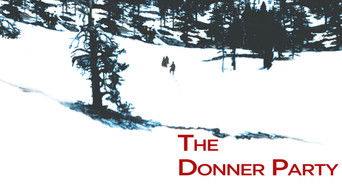 S5 · E3The Donner Party 1992-10-28 · 55 min
Of all the 19th century pioneer stories, none exerts so powerful a hold on the American imagination as this, during the worst winter ever recorded in the High Sierras. In June, 1846, 87 men, women and children began their legendary 2,000 mile journey from Illinois to California. They packed huge wagons, took food, hired servants. When family leaders made the fateful decision to take an untried short cut to beat the coming winter, only half would come out alive.
S5 · E4Liberators: Fighting on Two Fronts in World War II 1992-11-04 · 55 min
No episode summary available yet.
S5 · E5George Washington: The Man Who Wouldn't Be King 1992-11-18 · 55 min
He was bumbling, yet ambitious. He volunteered to serve his country, but insisted on being reimbursed for expenses. He was the most famous general of the Revolution but a dismal tactician on the battlefield. Greedy and selfish, service to the colonies would profoundly change him. The man who came to symbolize the American Revolution could also be incredibly brave, generous and an inspirational leader who scorned attempts to participate in any system but a democratic one.
S5 · E6Last Stand at Little Big Horn 1992-11-25 · 55 min
In 1876, when the U.S. Army planned its biggest Indian campaign yet against Sitting Bull and Crazy Horse, General George Custer led the chase. Custer and his 210 men were surprised and surrounded, the result of arrogance, bad planning and bad intelligence. The battle took "about as much time as it takes a hungry man to eat dinner," leaving no white survivors. One of the most frequently depicted and least understood moments in American history, the story is told from both sides.
S5 · E7If You Knew Sousa 1993-01-11 · 55 min
John Phillip Sousa became America's favorite bandmaster, but band music wasn't Sousa's only passion. He was the first to bring the classics -- Verdi, Wagner, Puccini -- to a burgeoning American middle class. Wildly popular, his was the first large musical organization to go on tour and make music pay. He helped give birth to that great American institution, the small town marching band.
S5 · E8Simple Justice 1993-01-18 · 55 min
Thirty years after the Supreme Court's "separate but equal" ruling, lawyer Charles Hamilton took over Howard University's rundown, segregated law school with the idea of training a cadre of elite African American lawyers to legally eradicate segregation, case by case, state by state. Their relentless and dangerous struggle would yield victory in the Supreme Court's landmark ruling, Brown v. Board of Education in 1954. A dramatic presentation.
S5 · E9Knute Rockne and His Fighting Irish 1993-02-08 · 55 min
When he died in 1931 in a plane crash on his way to Hollywood to sign a film contract, the President called it a "national loss." The funeral was broadcast live on CBS Radio to Europe, South America and Asia. As Notre Dame's football coach, Knute Rockne galvanized attention to his "Fighting Irish" and was a pivotal figure in the sudden rise of sports to a position of enormous power in American life.
S5 · E10Sit Down And Fight 1993-02-01 · 55 min
In 1936, Walter Reuther led one of the bitterest, bloodiest battles ever fought in the history of the American labor movement. By sitting down and stopping the machinery of factory production, auto workers forced the Big Three to recognize their union. GM tried turning off the heat and blocking food deliveries and Ford sent members of their private security force to beat up UAW officials, but workers stood their ground.
S5 · E11Rachel Carson's Silent Spring 1993-02-15 · 55 min
She had been a biologist for the federal government when she first took note of the effects of the unregulated use of pesticides and herbicides, especially DDT. Magazines refused to publish her articles because they were afraid of losing advertising. When Rachel Carson published Silent Spring in 1963, she was viciously attacked, called "an ignorant and hysterical woman." But her warning sparked a revolution in environmental policy and created a new ecological consciousness.
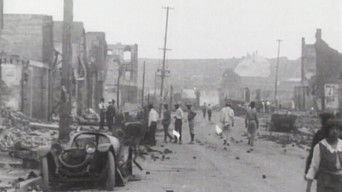 S5 · E12Goin' Back to T-Town 1993-03-01 · 55 min
In Tulsa, the community of Greenwood was a place where blacks had some measure of financial, social and political independence. Burned to the ground in 1921 by angry whites, Greenwood was rebuilt and boasted the largest concentration of black businesses in the country. In a nostalgic celebration of old fashioned neighborhood life, the black residents of "T-Town" relive their community's remarkable rise and ultimate decline.
S5 · E20Ishi: The Last Yahi Indian 1992-12-02 · 55 min
When "Ishi," the last surviving member of a small Indian tribe, walked into the small California town of Oroville in 1911, he became a media curiosity and scientific "specimen." The San Francisco Museum built a Yahi house where audiences could watch Ishi make arrowheads and shoot bows. Ishi went to the theater and received invitations of marriage. But contact would bring him terrible physical and psychological consequences.