
Seasons & episodes
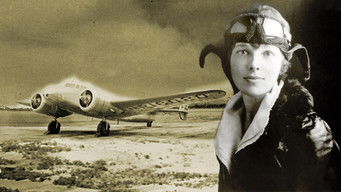 S6 · E1Amelia Earhart: The Price of Courage 1993-10-27 · 55 min
The first woman to fly solo across the Atlantic, Amelia Earhart was one of America's first celebrities. After only a few years as a pilot she became the best-known female flier in America, not only for her daring and determination but also for her striking looks and outspoken personality. Three weeks before her 40th birthday Earhart disappeared over the Pacific Ocean, and her story became legend.
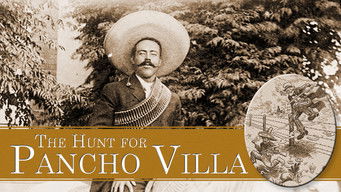 S6 · E2The Hunt for Pancho Villa 1993-11-08 · 55 min
Pancho Villa's raid on Columbus, New Mexico, was the culmination of years of bloody incidents along the border. For Americans, it was the last straw. In 1916, General John Pershing and his 150,000 man cavalry set out to get Villa, dead or alive. Before it was over, the U.S. and Mexico would be at the brink of war.
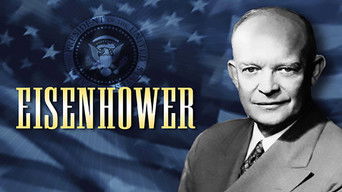 S6 · E3Ike (1): Soldier 1993-11-10 · 55 min
Dwight D. Eisenhower was a decorated general, a skillful politician, a tough Cold War adversary and one of America's least understood presidents. Part of the award-winning Presidents collection.
S6 · E4Ike (2): Statesman 1993-11-10 · 55 min
Dwight D. Eisenhower was a decorated general, a skillful politician, a tough Cold War adversary and one of America's least understood presidents. Part of the award-winning Presidents collection.
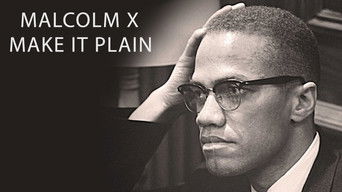 S6 · E5Malcolm X: Make It Plain 1994-01-26 · 55 min
If any man expressed the anger, struggle and insistence of black people for freedom in the sixties, it was Malcolm X. In Omaha, he was Malcolm Little; later he became "Detroit Red" a small time street hustler. From prison emerged another Malcolm, the fiery, eloquent spokesman for the Nation of Islam. After a trip to Mecca, there was a last transformation -- a new willingness to accept white allies. Who killed him and why has never been fully explained.
 S6 · E6America and the Holocaust: Deceit and Indifference 1994-04-06 · 85 min
Complex social and political factors shaped America's response to the Holocaust, from Kristallnacht in 1938 through the liberation of the death camps in 1945. For a short time, the U.S. had an opportunity to open its doors, but instead erected a "paper wall," a bureaucratic maze that prevented all but a few Jewish refugees from entering the country. It was not until 1944, that a small band of Treasury Department employees forced the government to respond.
 S6 · E7D-Day Remembered 1994-05-25 · 55 min
It was truly a "battle of the world," a pivotal turning point in history, and the most dramatic single event in WWII. A military operation fraught with incalculable risk; the secret campaign was a triumph of intelligence and teamwork moving 5,000 ships carrying 150,000 men and 30,000 vehicles across one of the most unpredictable and dangerous bodies of water in the world. For all the split-second planning and careful rehearsal, it came down to the young men whose remembrances and recollections are the heart of this story.
 S6 · E8The Hurricane of '38 1993-11-17 · 55 min
The Hurricane of '38 chronicles the lives of fishermen, residents and vacationers on the day before the storm, following their stories through one of the greatest natural disasters ever to befall the eastern seaboard.
 S7 · E1FDR (1): The Center of the World (1882-1921) 1994-10-12 · 55 min
Polio at age 39, president at age 50. Explore the public and private life of a determined man who steered the United States through two monumental crises: the Depression and World War II. FDR served as president longer than any other, and his legacy still shapes our understanding of the role of government and the presidency. A film by award winning filmmaker David Grubin. This first episode looks at the early life of FDR. Born into a wealthy family, there was little about his youth that would suggest the giant of history that he would become. His entry into state politics and a significant meeting with a woman named Eleanor would change his life and the course of a nation.
S7 · E2FDR (2): Fear Itself (1922-1933) 1992-10-12 · 55 min
In this second episode, the subject is FDR's courageous fight with polio. With his wife Eleanor Roosevelt at his side, FDR, wins the Democratic nomination for president. He takes office at the beginning of the Great Depression. Exhorting the nation to keep the faith, FDR utters his famous words: "The only thing we have to fear is fear itself."
S7 · E3FDR (3): The Grandest Job in the World (1933-1940) 1994-10-13 · 55 min
In episode 3, the subject is FDR's leadership of America during the Great Depression. The nation turned to this son of great wealth for a host of social programs that promised a New Deal for the common man.
S7 · E4FDR (4): The Juggler (1940-1945) 1994-10-13 · 55 min
The portrait of Franklin Delano Roosevelt concludes with his years as preside (1932 until his death in 1945), how he dealt with the Great Depression, and his link with Winston Churchill during World War II.
 S7 · E5Telegrams from the Dead 1994-10-19 · 55 min
For 40 years, a new religion called spiritualism affected the nation as no other ever had. Abraham Lincoln, P.T. Barnum, Frederick Douglass, senators, and scientists argued over the discoveries of the spirit world as revealed through mediums. Congress debated whether to provide $40,000 to research the feasibility of using the new wireless technology to reach the other world. But by 1880, as one spectacular fraud after another was revealed, the movement began to fade.
 S7 · E6Midnight Ramble 1994-10-26 · 55 min
The little-known story of a black independent film industry that thrived outside of Hollywood and produced close to 500 feature movies for African American audiences between 1910 and 1940. Many race movies tackled some of the difficult social issues that confronted black urban society: alcoholism, crime, morality, class conflict, even racism and lynching, setting the stage for today's independent black cinema movement.
 S7 · E7Battle of the Bulge 1994-11-09 · 55 min
The history of World War II's "Battle of the Bulge", when the German army launched a major surprise counteroffensive against the American forces that caught them almost completely off-guard, sweeping away major portions of the front line, pushing deep into the rear areas and causing tens of thousands of casualties before it was finally halted.
 S7 · E10One Woman, One Vote (1) 1995-01-23 · 55 min
From Elizabeth Cady Stanton's electrifying call to arms at Seneca Falls in 1848, to the last battle for passage of the Nineteenth Amendment in 1920, a recounting of the infighting, the alliances and betrayals, defeats and victories on the way to winning the right to vote. The struggle split the suffragist movement into two opposing forces: the militants who faced imprisonment and riots and those who argued for a quieter, more persuasive ways. Both tactics, it turned out, were needed.
S7 · E11One Woman, One Vote (2) 1995-01-30 · 55 min
From Elizabeth Cady Stanton's electrifying call to arms at Seneca Falls in 1848, to the last battle for passage of the Nineteenth Amendment in 1920, a recounting of the infighting, the alliances and betrayals, defeats and victories on the way to winning the right to vote. The struggle split the suffragist movement into two opposing forces: the militants who faced imprisonment and riots and those who argued for a quieter, more persuasive ways. Both tactics, it turned out, were needed.
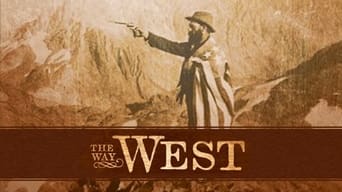 S7 · E12The Way West (1): Westward, the Course of Empire Takes Its Way (1845-1864) 1995-05-08 · 55 min
A six-hour documentary of how the West was lost and won, from the time of the Gold Rush in 1848 until after the last gasp of the Indian Wars at Wounded Knee in 1893, when the West was settled, subdued, exploited and incorporated into the American empire. Lakotas, Cheyennes, Kiowas, Poncas, Apaches, Nez Perces and Utes fought back, then watched as everything they had was taken from them, their way of life all but destroyed.
S7 · E13The Way West (2): The Approach of Civilization (1865-1869) 1995-05-09 · 55 min
A six-hour documentary of how the West was lost and won, from the time of the Gold Rush in 1848 until after the last gasp of the Indian Wars at Wounded Knee in 1893, when the West was settled, subdued, exploited and incorporated into the American empire. Lakotas, Cheyennes, Kiowas, Poncas, Apaches, Nez Perces and Utes fought back, then watched as everything they had was taken from them, their way of life all but destroyed.
S7 · E14The Way West (3): The War for the Black Hills (1870-1876) 1995-05-16 · 55 min
A six-hour documentary of how the West was lost and won, from the time of the Gold Rush in 1848 until after the last gasp of the Indian Wars at Wounded Knee in 1893, when the West was settled, subdued, exploited and incorporated into the American empire. Lakotas, Cheyennes, Kiowas, Poncas, Apaches, Nez Perces and Utes fought back, then watched as everything they had was taken from them, their way of life all but destroyed.
S7 · E15The Way West (4): Ghost Dance (1877-1893) 1995-05-17 · 55 min
A six-hour documentary of how the West was lost and won, from the time of the Gold Rush in 1848 until after the last gasp of the Indian Wars at Wounded Knee in 1893, when the West was settled, subdued, exploited and incorporated into the American empire. Lakotas, Cheyennes, Kiowas, Poncas, Apaches, Nez Perces and Utes fought back, then watched as everything they had was taken from them, their way of life all but destroyed.
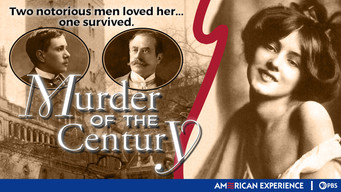 S8 · E1Murder of the Century 1995-10-16 · 55 min
In 1906, the murder of Stanford White, New York architect and man-about-town, by Harry K. Thaw, heir to a Pittsburgh railroad fortune, was reported "to the ends of the civilized globe;" much of the focus however was on Evelyn Nesbit, the beautiful showgirl in the center of the love triangle. A sensational murder story that had everything: money, power, class, love, rage, lust and revenge.
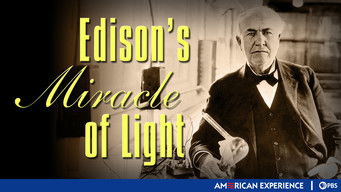 S8 · E2Edison's Miracle of Light 1995-10-23 · 55 min
In 1878, Thomas Edison announced his intention to harness Niagara Falls and produce a safe, electric light system. He said he could do it in six weeks. Almost three years later, all the components -- bulbs, sockets, switches, wires, junction boxes -- were finally ready. The "Wizard of Menlo Park" may have revolutionized the world, but he was caught in a web of personal, patent and corporate battles, eventually losing control of the industry he founded.
 S8 · E3Chicago 1968 1995-11-13 · 55 min
While America was reeling from the assassinations of Robert Kennedy and Martin Luther King and public outcry against the Vietnam War, the Democrats held their convention in Chicago. Yippie and anti-war protesters were determined to be heard; Mayor Daley was just as determined to stop them. A clash of political visions would be fought in the back rooms, on the convention floor and in the streets of Chicago.