
Seasons & episodes
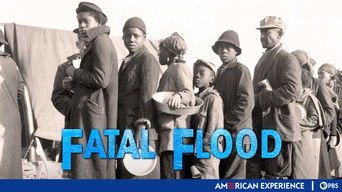 S13 · E11Fatal Flood 2001-04-16 · 55 min
Recalling the tidal wave of racial conflict that followed in the wake of the surging Mississippi as it inundated the delta town of Greenville, Miss., in April 1927. Greenville's leading planter, LeRoy Percy, was a racial moderate, but he joined other planters in refusing to allow their black workers to be evacuated for fear of losing their labor supply. Those workers were placed "at the end of the line" for Red Cross supplies, as one remembers, and tension grew.
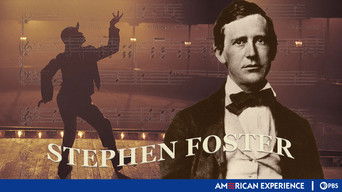 S13 · E12Stephen Foster 2001-04-23 · 55 min
A profile of quintessentially American composer Stephen Foster features interviews with historian Fath Ruffins, biographer Ken Emerson, musicologists Josephine Wright and Dale Cockrell, and modern-day musicians influenced by Foster's work.
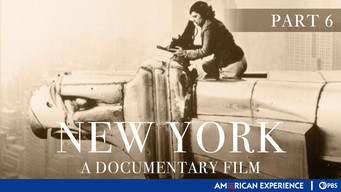 S14 · E1New York (6): The City of Tomorrow 2001-09-10 · 55 min
"City of Tomorrow (1929-45)" focuses on Mayor Fiorello LaGuardia, who used his close ties to FDR to make the city "a gigantic laboratory of civic reconstruction"; and master builder Robert Moses, who "adapted a 19th century city to 20th century circumstances," says historian Kenneth Jackson. The biggest one: the car. Says narrator David Ogden Stiers: "It challenged all previous assumptions about urban life."
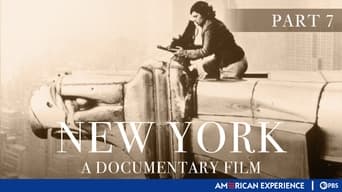 S14 · E2New York (7): The City and the World 2001-09-17 · 55 min
Conclusion. "The City and the World" begins in 1945, with New York "at the pinnacle," says historian David McCullough. By 1975 it was: "Ford to City: Drop Dead," as a Daily News headline put it. The program charts the city's decline as it follows what narrator David Ogden Stiers calls "a maelstrom of destruction in the name of urban renewal." Part and parcel of it were the highways Robert Moses built, many through vibrant neighborhoods. The city rebounded in the '80s.
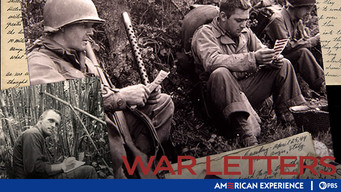 S14 · E3War Letters 2001-11-01 · 55 min
War letters from the American Revolution to the Gulf War are read by 15 actors (including Joan Allen, Edward Norton, Kevin Spacey and Courtney B. Vance). Accompanied by clips, home movies and re-creations, the letters reflect the horror, boredom, anger and, mostly, fear that war engenders. Many readings are followed by notations that the writers had died, but the hour isn't unrelentingly grim. “Pucker up,” one WWII GI writes to his sweetheart on VJ Day. “Here I come.”
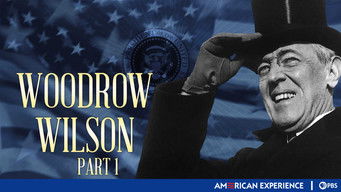 S14 · E4Woodrow Wilson (1): A Passionate Man 2002-01-06 · 55 min
A two-part profile of Woodrow Wilson in which news clips, atmospheric re-creations and readings (Rene Auberjonois and Blair Brown provide the voices of Wilson and his first wife, Ellen) supplement interviews with historians. Part 1 takes Wilson (1856-1924) from his Georgia childhood to the outbreak of World War I -- just as Ellen dies. "He's got to deal with the breakdown in the world," historian John Milton Cooper says. "And he's got to deal with the breakdown in his personal life."
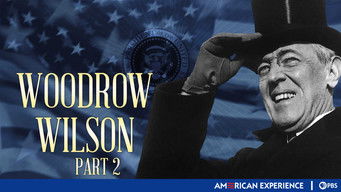 S14 · E5Woodrow Wilson (2): The Redemption of the World 2002-01-13 · 55 min
Woodrow Wilson reluctantly enters World War I in an effort to "make the world safe for democracy" as this two-part profile concludes. He wins the war but loses the peace, as he's confounded first by the French and British at the Treaty of Versailles in 1919; then by the Republicans in the Senate, who thwart U.S. entry into the League of Nations. Meanwhile, Wilson marries Edith Bolling-Galt (voice of Marion Ross) less than a year after his first wife dies. Edith would emerge as the President's virtual "regent" when Wilson suffers a stroke in 1919. Voice of Wilson: Rene Auberjonois.
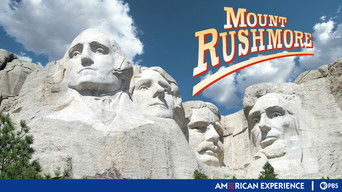 S14 · E6Mount Rushmore 2002-01-20 · 55 min
Chronicling the 16-year struggle (1925-41) to fashion Mount Rushmore in South Dakota's Black Hills, and profiling sculptor Gutzon Borglum, its creator. Borglum was 60 when plans for Rushmore were announced and he died not long after the final busts were completed. In between, money was often scarce and the granite from which the likenesses were hewn was crumbly. But Borglum wouldn't be denied, and he had foresight: He planned for 300,000 years' worth of weather erosion.
 S14 · E7Miss America 2002-01-27 · 55 min
Recalling the 80-year history of the Miss America Pageant and what narrator Cherry Jones calls "a barometer of America's shifting ideas of American womanhood." Included: eight former Miss Americas recall their runway strolls -- and the world beyond Atlantic City during their reigns. Also: comments from historians and social observers, including Gloria Steinem, a beauty-pageant contestant herself as a teen. "It was glamorous," she says, perhaps surprisingly. Also surprising is Miss America 1998 Kate Shindle's view of the swimsuit competition. "It's empowering," she says. "If you can do that, you can do anything."
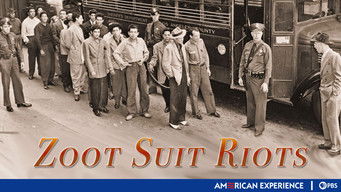 S14 · E8Zoot Suit Riots 2002-03-01 · 55 min
"Zoot Suit Riots" recalls a week of violence that rocked Los Angeles in June 1943, pitting Mexican-Americans against Anglos, many of them servicemen. Hector Elizondo narrates the hour, which uses atmospheric re-creations and interviews with historians and people who lived through it to chart a year of steadily rising tension leading up to the riots. One key event: an August 1942 altercation in which a young Mexican-American man died. The defendants were also Mexican-American, but the circus trial at which they were convicted inflamed prejudices and on June 3, 1943, says Elizondo, "the city exploded."
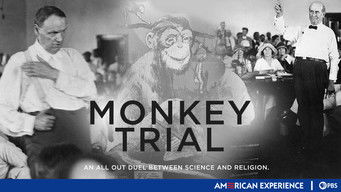 S14 · E9Monkey Trial 2002-02-23 · 55 min
Recalling the "epic battle" over evolution waged in 1925 by fundamentalist titan William Jennings Bryan and freethinking Clarence Darrow. This chronicle also explores trial oddities. It was held in Dayton, Tenn., because civic boosters wanted to put the town "on the map." Then there's John Scopes, the football coach (teaching science was a side job) who volunteered to be prosecuted. The offending book he used was Tennessee's "official" science text. Moreover, as he wrote in his memoirs, he didn't recall ever actually teaching evolution.
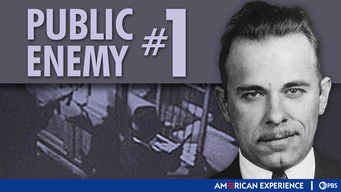 S14 · E10Public Enemy #1 2002-02-17 · 55 min
John Dillinger may have been "Public Enemy No. 1" in 1933 and '34, but Americans didn't reflexively hate him, and this hour explores reasons why as it chronicles his 14-month bank-robbing spree. Dillinger "represents a rebellious impulse that many people in the Great Depression had good reason to feel," says Tom Doherty, one of the historians interviewed. Morever, "he was a charming guy," says another, Claire Potter. The hour also features a grandnephew of Dillinger and Alston Purvis, the son of Melvin Purvis, the G-Man who finally caught up with the Public Enemy.
 S14 · E11Ansel Adams 2002-04-21 · 55 min
Ric Burns' profile of the photographer whose connection to Yosemite is such that a mountain near the park is named for him. Adams (1902-84) first visited Yosemite at age 14. "It completely changed his life," says William Turnage, Adams' former business manager. Then his father gave him a Kodak Box Brownie and, as narrator David Ogden Stiers puts it, "he was off." Adams' career is recalled by colleagues, biographers, and his son and daughter.
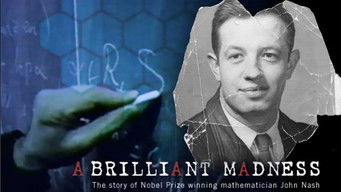 S14 · E12A Brilliant Madness 2002-04-28 · 55 min
Mathematics genius John Nash recalls his bout with schizophrenia (the subject dramatized in the Oscar-winning film "A Beautiful Mind"). Nash is joined by his wife, Alicia; son John Stier; colleagues; and author Sylvia Nasar, who wrote the book from which the movie was adapted. They (and narrator Liev Schreiber) recall Nash's prodigious intellect, arrogant demeanor and odd behavior. He developed his "equilibrium point" theory as a student, but then lost his own equilibrium. It would take 30 years, but the theory would come to revolutionize economics and win him the Nobel Prize. And Nash would regain his mind.
 S14 · E13Ulysses S. Grant (1): The Warrior 2002-04-01 · 55 min
A moody two-part biography of Ulysses S. Grant (1822-85). Part 1, "Warrior," quickly sketches his largely unsuccessful pre-Civil War life and ends on Good Friday 1865, when his wife told him to turn down a theater invitation because she didn't like the company of Mary Lincoln. During the war, Grant owed his success to his ability to treat his often unruly troops as he did his horses: calmly, firmly, quietly. But if he was a hero at Fort Donelson and Vicksburg, he's also described as being a "butcher" at Shiloh and Cold Harbor.
 S14 · E14Ulysses S. Grant (2): The President 2002-04-02 · 55 min
The conclusion of this biography of Ulysses S. Grant (1822-85) covers the last 20 years of the life of "the most popular man of the 19th century," as historian Donald Miller calls him. Grant's presidency (1869-77) wasn't the reason. "Military uniforms kept the sides straight on the battlefield, but in Grant's new world it was not so easy to tell friends from enemies," says narrator Liev Schreiber, and some of Grant's political "friends" were crooks. Add to that the intense opposition of white southerners to his Reconstruction policies. Then the U.S. economy went south during the panic of 1873.
 S15 · E1Jimmy Carter (1): Jimmy Who? 2002-11-11 · 55 min
An evocative two-part profile of Jimmy Carter explores how his career has been shaped by what former speechwriter Hendrik Hertzberg calls his "moral ideology." Produced by Adriana Bosch ("American Experience" biographies of Reagan and Grant), the film features comments by Carter's wife, Rosalynn, and son Chip, as well as historians, former Vice President Walter Mondale and a number of key Carter aides. Part 1 ends just after the 1976 campaign, which put Carter in the White House. He was, says Hertzberg, "exactly what the American people would say they want."
 S15 · E2Jimmy Carter (2): Hostage 2002-11-12 · 55 min
"Hostage," the conclusion of a two-part Jimmy Carter biography, covers his presidency and post-presidency. Human rights were to be "a basic tenet of our foreign policy," Carter declared in 1977, but he was overwhelmed by events in Iran, and economic woes at home led to a "malaise" so severe that the 1978 Camp David accords didn't even give him a boost in the polls. Then came the hostage crisis. But back in Plains, he and Rosalynn regrouped. And now? As former Carter speechwriter Henrdrik Hertzberg puts it: "His values, his devotion to human rights, keep on resonating in a way that his failures and weaknesses don't."
 S15 · E3Chicago: City of the Century (1): Mudhole to Metropolis 2003-01-13 · 55 min
A three-part history based on historian Donald L. Miller's book "City of the Century: The Epic of Chicago and the Making of America." Part 1 begins with the arrival of French explorers Marquette and Joliet in 1673, and follows the digging of canals, and the arrival of railroads and industry. It ends with the Great Fire of 1871, which interrupted the city's explosive 19th-century growth only momentarily.
 S15 · E4Chicago: City of the Century (2): The Revolution Has Begun 2003-01-14 · 55 min
A three-part history based on historian Donald L. Miller's book "City of the Century: The Epic of Chicago and the Making of America." Part 2 covers the 1870s and '80s, when the city's can-do business leaders found themselves increasingly at odds with labor. The episode profiles meatpacker Augustus Swift; sleeping-car magnate George Pullman, who established what he hoped would become a utopian workers community; and merchant prince Marshall Field, who had no such notions. Then there were the anarchists.
 S15 · E5Chicago: City of the Century (3): Battle for Chicago 2003-01-15 · 55 min
A three-part history based on historian Donald L. Miller's book "City of the Century: The Epic of Chicago and the Making of America." Part 3 concludes by exploring the city's ethnic and class tensions during the 1880s and '90s. Ethnic groups banded together in what narrator David Ogden Stiers calls "a defensive communalism," but most immigrants headed first to the city's worst slum, the Near West Side, which was presided over by Alderman Johnny Powers, the "prince of the boodlers," who traded services for votes.
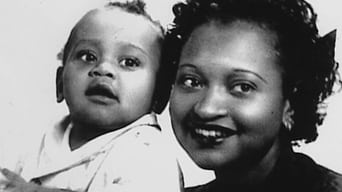 S15 · E6The Murder of Emmett Till 2003-01-20 · 55 min
Recalling the 1955 murder of a 14-year-old black youth in the Mississippi delta, an incident that could very well have launched the civil-rights movement. "He was a sacrificial lamb," says Mamie Till of her son Emmett, a fun-loving Chicago teen who was slain after whistling at a white woman outside a general store in Tallahatchee County, Miss. Less than a month after Till's mutilated body was found, two white defendants were acquitted (in 67 minutes) by an all-white jury.
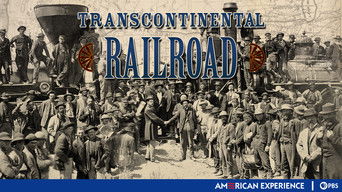 S15 · E7Transcontinental Railroad 2003-01-27 · 55 min
Charting the race between the Union Pacific and Central Pacific to construct a transcontinental railroad to link the U.S. It ended May 10, 1869, in Promontory Point, Utah. The construction was "the engineering marvel of the 19th century -- and a flat-out swindle,” says narrator Michael Murphy. It was also "the technological manifestation of Manifest Destiny,” says historian Wendell Huffman, one of the program's commentators. And it sealed the fate of the Plains Indians. When the final spike was in place, Murphy says, "America could take its place as the first nation in the world."
 S15 · E8Partners of the Heart 2003-02-10 · 55 min
Chronicling the unlikely partnership between a white surgeon and a black "technician" that led to a procedure to correct blue-baby syndrome in 1944. The principals: Vivien Thomas, a black man with only a high-school diploma, and Alfred Blalock, the patrician chief of surgery at Johns Hopkins. Blalock pioneered the surgery to correct the congenital heart defect, but it was Thomas who devised to procedures that were used. And they did it at a time, narrator Morgan Freeman says, when the two "could not share the same lunch table in the Hopkins cafeteria."