
Seasons & episodes
 S15 · E9The Pill 2003-02-24 · 55 min
Charting the development of an oral contraceptive during the 1950s and its effect on "the sexual revolution" of the '60s. It was enormous. Says Sylvia Clark, who grew up before the pill was available: "Women began to see themselves for the first time in all of history as economically self-sustaining." The hour examines reasons why, as it profiles the pill's key figures, including biologist Gregory Pincus and gynecologist John Rock; heiress Katharine Dexter McCormick, who financed the research; and Margaret Sanger, the activist who spearheaded it. Among Sanger's motivations: her own mother, who had 18 pregnancies (seven of them miscarriages) and died at 49.
 S15 · E10Daughter from Danang 2003-04-07 · 55 min
"Daughter from Danang," an Oscar-nominated documentary, chronicles the tearful reunion of an Amerasian refugee with her Vietnamese family 22 years after the war ended. Heidi Bub, who was airlifted out of her homeland as the war was ending, grew up in Tennessee and calls herself "101 percent Americanized." The 1997 reunion is at first joyful, but cultural differences soon emerge, and after a few days she begins to feel "smothered" by her biological mother. Then, when her brother asks for financial support, Heidi turns bitter. It is, says Tran Tuong Nhu, the journalist who accompanied her, "more than she had bargained for."
 S15 · E11Seabiscuit 2003-04-21 · 55 min
"Seabiscuit" recalls the squat and ugly racehorse that riveted the nation in the late 1930s. Interviewees include author Laura Hillenbrand ("Seabiscuit: An American Legend"), who charts the Cinderella story of this "equine catastrophe," as narrator Scott Glenn calls him, and his hard-luck jockey, Red Pollard, who kept getting hurt. But Seabiscuit won, often inspiringly and most notably in the 1940 Santa Anita Derby, in which both the horse and jockey were coming off injuries.
 S15 · E12Bataan Rescue 2003-07-07 · 55 min
"Bataan Rescue," narrated by Scott Glenn, recalls the daring January 1945 commando raid that freed 513 survivors of the 1942 Bataan Death March who were being held in a Japanese POW camp in the Philippines. Rescuers recall how they did it, and POWs describe what it meant to them. "That's the night I was reborn," says one. "That's my birthday."
 S15 · E13Murder at Harvard 2003-07-14 · 55 min
Historian Simon Schama ("A History of Britain") plays sleuth -- searching, he says, "not for literal truth, but for poetic truth" -- as he speculates about whether an innocent man was executed for a 154-year-old "Murder at Harvard." The victim was prominent Boston physician-turned-businessman George Parkman, who disappeared on Nov. 23, 1849. Remains thought to be his were found a week later in the Harvard Medical College's basement, and chemistry professor John Webster, who owed Parkman money, was convicted of the crime on the basis of circumstantial evidence.
 S16 · E1New York (8): The Center of the World 2003-09-08 · 55 min
Filmmaker Ric Burns adds a poignant postscript to his series "New York: A Documentary Film" with this chronicle of the World Trade Center's rise and fall. Burns recounts Sept. 11 wrenchingly, but he devotes more than half the film to the Center's rise. This isn't a pretty story: It's one of economic, political, architectural and engineering labyrinths. The result was a critical and commercial flop, though historian Kenneth Jackson says: "It's more important to history now that it's gone."
 S16 · E2Reconstruction: The Second Civil War (1): Revolution 2004-01-12 · 55 min
"Reconstruction: The Second Civil War," a two-part report, follows political leaders and ordinary Americans alike as it chronicles one of the most contentious periods in American history. "An old social order had been destroyed," says Columbia University historian Eric Foner. "Everything was up for grabs." Part 1 begins with the end of the war, as President Johnson, no friend of the freed slaves, squares off against Republicans in Congress. In 1868 they pass the 14th Amendment, which is "the origin of the concept of civil rights," Foner notes. Johnson vetoed it and, says narrator Dion Graham, "the lines were drawn."
 S16 · E3Reconstruction: The Second Civil War (2): Retreat 2004-01-13 · 55 min
"Reconstruction" concludes by following whites and blacks in Georgia, South Carolina and Louisiana between 1867 and 1877. It begins with the granting of widespread voting rights for blacks in the South, and with whites "preparing for the worst," says narrator Dion Graham. It wouldn't end that way for South Carolina rice planter Frances Butler, who was not at all pleased to "negotiate" with her family's former slaves. Their leader: Tunis Campbell, who would soon be elected to the state Senate. In Georgia, too, blacks were elected to the legislature. And in Louisiana, Vermonter Marshall Twitchell began amassing both cotton lands and political power. Local whites, who resented Twitchell deeply, called him a "carpetbagger."
 S16 · E4Citizen King 2004-01-19 · 55 min
"Citizen King," a reverential chronicle of the final five years of Rev. Martin Luther King Jr.'s life, employs eyewitnesses to the history King made to recall it. Among them: Coretta Scott King, former representative William Gray, author David Halberstam, civil-rights veterans Joseph Lowery, Roger Wilkins and Taylor Branch, long-time political figure Andrew Young, former senator Harris Wofford, former attorney general Ramsey Clark and theologian James Cone.
 S16 · E5Remember the Alamo 2004-02-02 · 55 min
"Remember the Alamo" recalls the contributions of Tejanos (Hispanic Texans) to the struggle for Texan independence. It profiles Tejano leader Jose Antonio Navarro (1795-1871), an ally of Stephen F. Austin in the effort to build up the Texas economy by luring American settlers (cotton planters particularly) in the 1820s. Navarro was also a spearhead of the revolt against Mexican general Antonio Lopez de Santa Anna in 1836.
 S16 · E6Tupperware! 2004-02-09 · 55 min
"Modern dishes for modern living" (and they "burped," no less), sold by women at "home parties." This slice of 1950s Americana is recalled in "Tupperware!" "The era and the product were made for each other," says one of the Tupperware "ladies" who are interviewed throughout the hour. Husbands are interviewed too because Tupperware was oftentimes a family affair, with the men working behind the scenes. The man in charge: Earl Tupper, who invented the sealable plastic containers. But a woman, Brownie Wise, developed Tupperware's phenomenally successful marketing plan. What gives "Tupperware!" its bite is the fact that Tupper and Wise didn't get along.
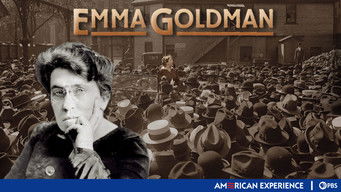 S16 · E7Emma Goldman 2004-04-12 · 55 min
Recalling Emma Goldman (1869-1940), the fiery and formidable radical whose life, says narrator Blair Brown, was "dedicated to free speech, free thought and free love." This profile is sympathetic to Goldman, but she doesn't get a free ride. Indeed, historian Kevin Baker calls her anarchism "jaw-droppingly naive," and no one challenges that. No one denies her passion, either. Says playwright Tony Kushner, "She lived a life on fire."
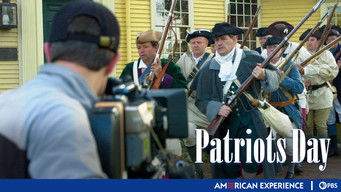 S16 · E8Patriots Day 2004-04-19 · 55 min
"Patriots Day" follows Revolutionary War re-enactors as they prepare to re-fire those shots heard 'round the world on April 19, 1775, in Lexington and Concord. Filmmaker Marian Marzynski's style is low key and at times whimsical (real redcoats didn't use cell phones), but the "living historians" are serious. Says one: "It is important to understand the passion of what took place here."
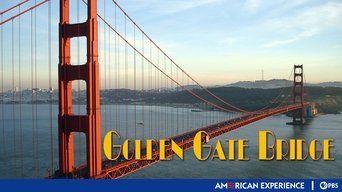 S16 · E9Golden Gate Bridge 2004-05-03 · 55 min
Recalling the construction of the Golden Gate Bridge, a "graceful leap over an unprecedented space," as narrator David Ogden Stiers calls it. The Golden Gate presented its engineers with a "magnificent" challenge of wind, fog and colliding currents, and they succeeded so magnificently that historian Kevin Starr, the State Librarian of California, likens it to "Hamlet" or a Beethoven symphony. This hour blends technology and poetry smoothly, as does the bridge. It is, sums up Starr, "a fusion of perfections."
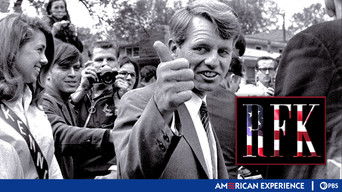 S17 · E1RFK (Part 1 & 2) 2004-10-04 · 55 min
A shy, if driven man, Robert Kennedy "wasn't built for the spotlight, he was built for the wings," says journalist Jack Newfield. While John Kennedy was alive, that's where Bobby stayed -- making certain that JFK remained in the spotlight.
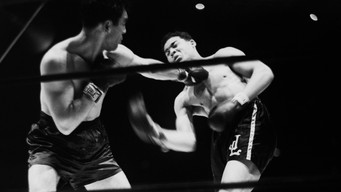 S17 · E2The Fight 2005-01-24 · 55 min
"The Fight" recalls the June 1938 heavyweight title bout between Joe Louis and the German Max Schmeling, and assesses its political and social ramifications. "It was going to pit whole nations and whole ideologies against each other," says narrator Courtney B. Vance. Producer-director Barak Goodman also explores Louis's place in America's racial divide as well as the genial Schmeling's ties to Hitler.
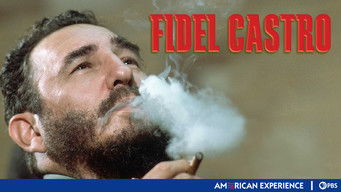 S17 · E3Fidel Castro 2005-01-31 · 55 min
Fidel Castro's march through Cuba and the second half of the 20th century is chronicled by filmmaker Adriana Bosch. Here, Cuban exiles and former Castro confreres, foreign-policy experts, a former Castro brother-in-law and his daughter Alina Fernandez paint a portrait of a dictator, a social reformer -- and a survivor.
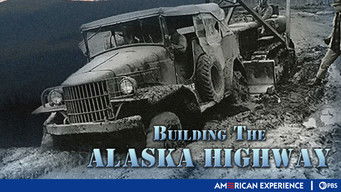 S17 · E4Building the Alaska Highway 2005-02-07 · 55 min
Recalls the construction of the 1500-mile "shortcut to Tokyo" through Canada in 1942 by 11,000 U.S. troops (4,000 of them black). It wasn't the Army's greatest World War II triumph, but it was one of the first, and it gave Americans, who feared a Japanese buildup in the Aleutians, a needed morale boost. This hour is light on military and engineering detail, and packed with proud GIs recalling mud, cold and toil.
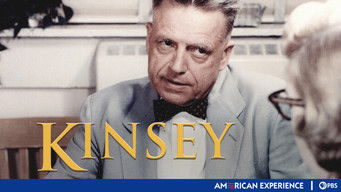 S17 · E5Kinsey 2005-02-14 · 55 min
Profiling Dr. Alfred Kinsey, the Indiana University zoologist whose "revolutionary picture of American sexuality" rocked the country in the late 1940s and early '50s. Filmmakers Barak Goodman and John Maggio interview Kinsey colleagues and biographers, along with people took part in his studies, to paint a portrait of an "unyielding" proponent of sexual freedom who practiced what he preached. Says sexologist Paul Gebhard, a Kinsey assistant: "He was a rebel."
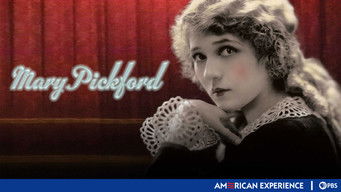 S17 · E6Mary Pickford 2005-04-04 · 55 min
Profiling Mary Pickford, the silent-screen "sweetheart" who blazed the trail to Hollywood and became "America's first superstar." Pickford (1893-1979) was also an astute businesswoman: She founded United Artists with Charlie Chaplin and her husband-to-be Douglas Fairbanks. But, as filmmaker Sue Williams stresses here, there was no glorious sunset. As Pickford biographer Eileen Whitfield puts it, she was "the first has-been created by film."
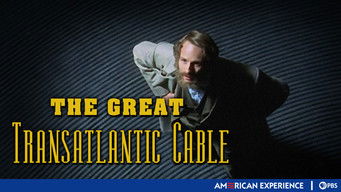 S17 · E7The Great Transatlantic Cable 2005-04-11 · 55 min
Cyrus Field's struggle to lay telegraph cables across the Atlantic in the 1850s and '60s is chronicled. When Field finally succeeded, in 1866, it marked "the annihilation of space and time," says historian David Czitrom. But the 13-year effort -- recalled here in re-creations and comments from historians and engineers -- included many false starts and one spectacular failure. Still, says Czitrom, "he never let up."
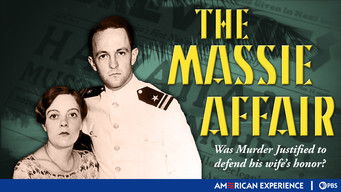 S17 · E8The Massie Affair 2005-04-18 · 55 min
"The Massie Affair" chronicles a 1931 Honolulu rape case involving a young white Navy wife that became even more serious when one of the acquitted Hawaiian defendants was later kidnapped and murdered. Although marital discord and social "honor" play into the story, it's mostly about stark racial injustice that touched even the White House. It uncovers "cold, hard truths about America and the people who ruled it."
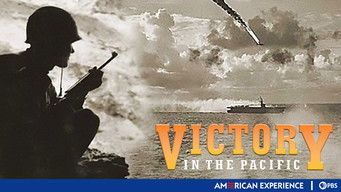 S17 · E9Victory in the Pacific 2005-05-02 · 55 min
No episode summary available yet.
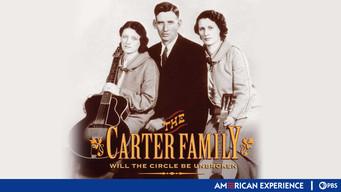 S17 · E10The Carter Family: Will the Circle Be Unbroken? 2005-05-09 · 55 min
Recalls "the first family of country music" in interviews with Carter relatives, music writers, and singers Gillian Welch, Joan Baez, Marty Stuart and Rodney Crowell. The tough early lives of A.P. Carter, his sister Maybelle and wife Sara were lightened by music, and their 1927 RCA audition proved to be "the big bang of commercial country music." But A.P. and Sara's marriage couldn't survive the turmoil that followed.