
Seasons & episodes
 S6 · E5Worst Days on Planet Earth 2011-11-29 · 45 min
Earth may seem like the most hospitable planet in the solar system. But look again. Startling new discoveries reveal the blue planet has been plagued by more chaos and destruction than scientists once imagined. Stand on the Earth billions of years ago as a primitive planet slams into it. Shiver as our entire globe is frozen over like a gigantic snowball. Feel the heat as mammoth volcanoes scorch the landscape and darken the sky. From a cosmic gamma ray burst frying away the ozone layer to an Everest-size asteroid slamming into the ocean, we'll reveal new information about how these unparalleled events drove life to the brink of total extinction. Out of this continuous devastation, how has our planet--and life--got to where it is today? Are the worst days behind us--or lurking in the distant future?
 S6 · E6UFO: The Real Deal 2011-12-13 · 45 min
Many argue that flying saucers and other extra-terrestrial space ships continuously visit the earth. If that were true, what kinds of technologies would such alien spacecraft require? And do eyewitness reports of UFO sightings jibe with modern theories of how interstellar travel might be possible? Authors, astronomers and theoretical physicists weigh in with the blueprints for inertia-canceling devices, nuclear-powered craft, antimatter propulsion systems and even warp drives. Based on Einstein's theories and countless scientific studies, we'll find out how these visitors might bridge the vast distances between the stars. And if they could survive such hazardous journeys, are they flesh and blood or intelligent machines?
 S6 · E7God and the Universe 2011-12-20 · 45 min
Since the dawn of civilization, humans have wondered who or what created the universe. Religion offers a spiritual answer, but do the latest discoveries in physics show evidence of a transcendent intelligence, or simply that the laws of physics by themselves could have led to the universe in which we live? This episode embarks on a mind-bending scientific search for God, asking physicists and theologians if the seemingly miraculous way the universe has been calibrated to support life is evidence of a creator...whether string theory will eventually be able to rule out the existence of God...why Stephen Hawking says the universe could have been created spontaneously...and how an advanced civilization in another universe could have conceivably created our own.
 S7 · E1How Big, How Far, How Fast 2012-04-29 · 45 min
The biggest objects, farthest distances, and fastest speeds are made relatable through extreme physical analogies.
 S7 · E2Alien Sounds 2012-05-06 · 45 min
What does the Universe sound like? From the sweep of a pulsar, to the deafening roar of our boiling sun this episode explores the undiscovered soundscapes of the solar system, the galaxy, and the entire cosmos. And, is it true that in space nobody can hear you scream?!? Our scientists reveal that there are places in the Universe that prove this sci-fi statement wrong.
 S7 · E3Our Place in the Milky Way 2012-05-13 · 45 min
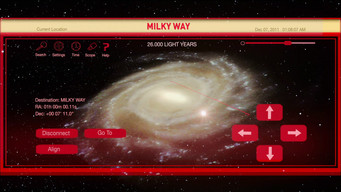
An exploration of Earth's cosmic neighborhood. Looking beyond the borders of our solar system, what's nearby in our galaxy? How do the other objects in our local area influence life on Earth? And, how did Earth's place in the galaxy make it the perfect place for the development of advanced life?
 S7 · E4Deep Freeze 2012-05-20 · 45 min
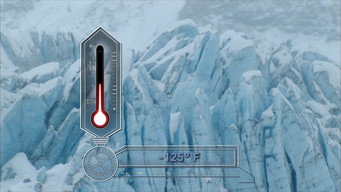
This episode discusses the coldest places in the universe from labs on earth to super cold places in our solar system, galaxy and beyond.
 S7 · E5Microscopic Universe 2012-06-03 · 45 min
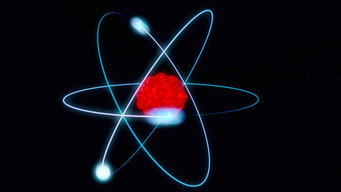
An examination is conducted into the world of miniature particles, as microscopic objects like neutrinos MACHOs, WIMPs and many others may ultimately lead to understanding more about the mysteries surrounding the cosmos.
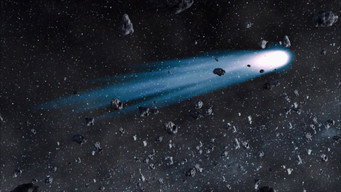 S7 · E6Ride the Comet 2012-06-10 · 45 min
A comet travels to the sun from the outer reaches of the solar system.
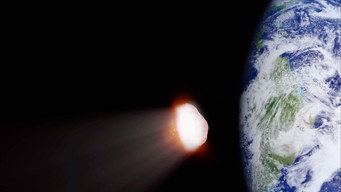 S7 · E7When Space Changed History 2012-06-17 · 45 min
Objects from space have changed history throughout the ages.
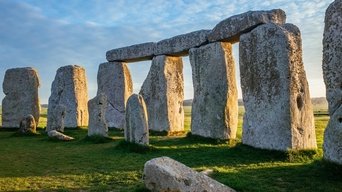 S8 · E1Stonehenge 2014-03-01 · 45 min
Perhaps the most mysterious structure on Earth, Stonehenge has stood on a plain in Southern England for 5000 years. Why is it there? In this episode we explore the possibility that this was a prehistoric astronomical observatory. Here ancient astronomer priests may have divined the complex movements of the Sun and Moon, recognizing patterns that would not be discovered elsewhere for thousands of years. The primitive Shamans may have also been the first astronomers to predict eclipses.
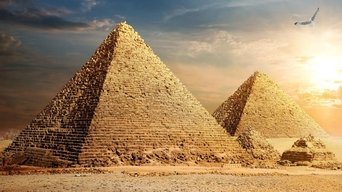 S8 · E2Pyramids 2014-03-08 · 45 min
The Great Pyramids of Giza remain one of the enduring wonders of the ancient world. These mesmerizing monuments have eluded astronomers and archeologists for centuries. Why and how were they built? Were they merely burial tombs, or a cosmic vehicle to the celestial world? The world's renowned Egyptologists, astronomers and engineers join forces to solve some of the long-held mysteries about the pyramids. What were the motives and methods behind the orientation of the pyramids to face the four cardinal directions with extreme accuracy? Did the ancient Egyptians use the sun or nighttime stars in the orientation of the pyramids? Were the pyramids the pharaohs' portal to the nighttime stars? Or was the entire Giza complex built as a place of cult worship to the sun?
 S8 · E3Heavenly Destruction 2014-03-15 · 45 min
Sodom and Gomorrah–a terrifying Biblical tale of two cities incinerated by a hail of fire and brimstone. Was this a fantastic fable, or an actual apocalyptic disaster? Astronomers, archeologists and biblical scholars investigate the possible science behind the myth. Two separate archeological sites along the Dead Sea claim to hold the remains of the actual sin cities. Newly discovered ancient artifacts may even hold the secrets to their destruction? Could an asteroid be responsible for the destruction of Sodom and Gomorrah?
 S8 · E4Star of Bethlehem 2014-03-22 · 45 min
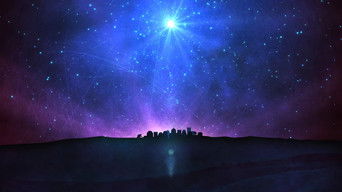
What was the astronomical reality behind the star that, according to the Gospel of Matthew, guided the Magi to the young Jesus? This episode examines almost 20 centuries of theories, including meteors, novae, supernovae and comets…but is the truth to be found in a combination of astronomy–and astrology? Recent theories suggest that the "star" was the planet Jupiter in a series of conjunctions with other planets, stars and constellations, and that these conjunctions were interpreted by the Magi–astrologers and priests of the Zoroastrian religion–as heralding the birth of the Jewish Messiah.
 S9 · E1Omens of Doom 2015-04-18 · 45 min
To our ancestors, the appearance of certain astronomical events meant something big and something bad was coming. They were portends of death, plague, famine, or war. But what were they really seeing? And how did fear of these objects in the sky actually change the course of history?
 S9 · E2The Eye of God 2015-04-25 · 45 min
Could the strange shapes of the universe solve the mysteries that have haunted mankind since ancient times? Is the eye of God peering at us from the heavens? What is the strange hexagon at the pole of Saturn, or the face on the Moon? Each shape tells its own story of an object's origin, and how physical forces shaped the Universe, and each is a chapter in the greater saga of existence.
 S9 · E3Apocalyptic Visions 2015-05-02 · 45 min
Hell fires, endless winters, or a planet wracked by earthquakes are a few versions of Armageddon visualized by the Vikings, Aztecs, and the rest of our ancient ancestors. But which does modern science think will be closest to the truth? Celestial phenomena--the aging of our sun, the expansion of our universe, and other potentially cataclysmic events--could trigger the kind of Armageddon the ancients feared. Which ancient prophecy do scientists believe actually foretells our doom? And how close are we to the end of the world?
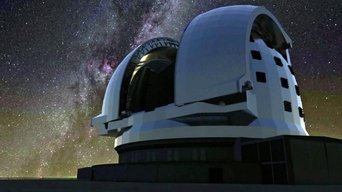 S9 · E4Alien Worlds 2015-05-09 · 45 min
The ancients believed that the universe consisted of countless worlds we could not see, and argued endlessly over the nature of these distant, invisible planets and whether they might be inhabited. Until recently many scientists thought we would never discover the truth, believing that extra-solar planets were simply too far, too small and too dim to detect. But new technologies have suddenly revealed thousands of distant planets, opening up the most exciting period in astronomy in decades. Some believe we're on the verge of answering the ancient question: are we alone in the universe?
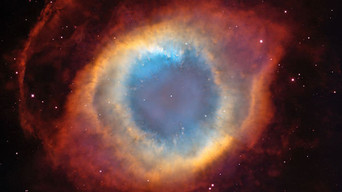 S9 · E5Predicting the Future Air date unannounced · 45 min
Many believe that the celestial movement of the Sun, planets and moon gives us the blueprint for life, and governs our future. From Roman emperors, to kings and queens, to modern politicians, knowledgeable and powerful people have consulted an ancient system of predicting terrestrial events from celestial observations. But is there proof that this system of tracking astronomical phenomena can actually predict our future?
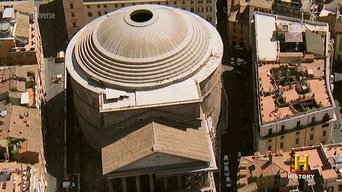 S9 · E6Roman Engineering 2015-05-23 · 45 min
Do Rome's ancient monuments have secret connections to the Sun? New archaeological evidence, confirmed by NASA data and recreated in state-of-the-art virtual reality, suggests that early Roman emperors mastered architecture and astronomy to make the Sun create strange special effects for reasons both political and personal. One set up an obelisk and altar that blocked the Sun on the anniversary of Julius Caesar's murder, another built a domed room that bathed him in sunlight on certain days, and the Emperor Hadrian designed the Pantheon to mark cosmic events like equinoxes, and turned the central "oculus" of the temple dome into his own personal spotlight, but for what nefarious purposes? We uncover the last great mysteries of the ancient world's greatest empire. The answers are hidden in ancient ruins...and among the stars.