
Seasons & episodes
S0 · E26Episode 26 2018-02-03 · 30 min
No episode summary available yet.
S0 · E27Episode 27 2020-05-16 · 180 min
No episode summary available yet.
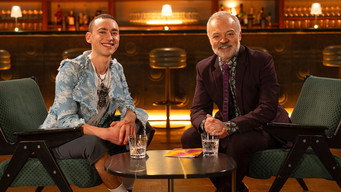 S0 · E28Graham Meets Olly 2023-03-03 · 9 min
Graham Norton chats to Olly Alexander, the UK's act for Eurovision 2024. The two superfans talk candidly and reveal more details, including the music video for Olly’s song Dizzy.
 S0 · E29The Big Eurovision Party 2022-02-22 · 105 min
Get ready for a spectacular show filled with some of the biggest names from the history of the Eurovision Song Contest. Straight from the Ziggo Dome in Amsterdam, Eurovision legends come together to celebrate the rich musical legacy of the iconic event. The Big Eurovision Party is a celebration of music, energy and excitement as the artists take the stage to perform some of the most memorable songs from the past while Rylan catches up with some of them backstage. With performances by Conchita Wurst, Johnny Logan, Käärijä, Måns Zelmerlöw, Cornelia Jakobs, Gjon’s Tears, Alessandra, Rosa Linn and many more. You do not want to miss this party!
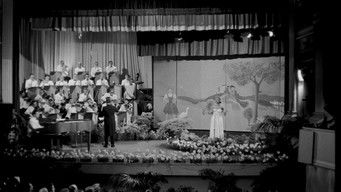 S1 · E1Grand Prix of the 1956 Eurovision Song Contest 1956-05-24 · 80 min
Inspired by the Italian Sanremo Festival, the idea to organise a pan-European musicial competition was born at a meeting of the European Broadcasting Union in Monaco in 1955. It was decided that the first ever Eurovision Song Contest would be hosted the following year in the Swiss resort of Lugano. The 1956 Eurovision Song Contest was primarily a radio show, although some cameras were taping the contest for the few Europeans who had a television set at that time. Lohengrin Filipello hosted the programme, which lasted 1 hour and 40 minutes. The seven participating countries each submitted two entries. The songs of the contest were not to exceed three and a half minutes, and the performers were accompanied by an orchestra of 24 musicians, led by Fernando Paggi.
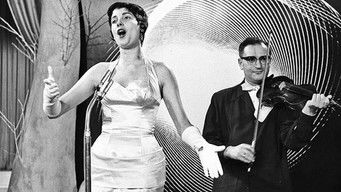 S2 · E1Grand Prix of the 1957 Eurovision Song Contest 1957-03-03 · 70 min
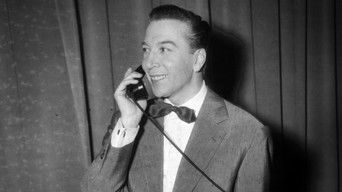
The 1957 Eurovision Song Contest was hosted by the Hessischer Rundfunk on behalf of Deutsches Fernsehen ARD. Austria, Denmark and the United Kingdom entered the contest for the first time, joining the other seven participating countries from the previous year. Despite the fact that an increasing number of Europeans had access to television, the contest was still mainly a radio programme at this time. In a change to the contest the year before, duos were allowed into the competition. Danish duo Birthe Wilke and Gustav Winckler shocked the audience with their passionate on-screen kiss, the longest in the history of the contest. Germany's entry, performed by Margot Hielscher featured a telephone during the performance, the first gimmick to appear at the Eurovision Song Contest.
 S3 · E1Grand Prix of the 1958 Eurovision Song Contest 1958-03-12 · 75 min
The Dutch entry Net Als Toen by Corry Brokken had brought the first victory to the Netherlands in Frankfurt am Main the previous year and Dutch TV was the proud host in 1958. It was the first time that the winning country from the previous year had hosted the contest. Despite ending third, the Italian entry Nel Blu Dipinto Di Blu, better known under the title Volare, performed by Domenico Modugno, became a worldwide hit and to date. It is one of the most successful songs in the history of the Eurovision Song Contest. Domenico even managed to reach the No.1 spot in the US-American Billboard Charts with his song and was also awarded three Grammies.
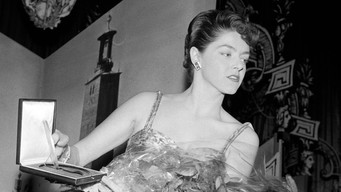 S4 · E1Grand Prix of the 1959 Eurovision Song Contest 1959-03-11 · 75 min
The Eurovision Song Contest of 1959 welcomed the small principality of Monaco. Moreover, the United Kingdom re-entered the contest after one year of absence, and Luxembourg decided not to participate. A new rule was introduced to this fourth Eurovision Song Contest; musical experts were no longer allowed in the national juries, but other than that, the same voting system as in 1957 and 1958 was used.
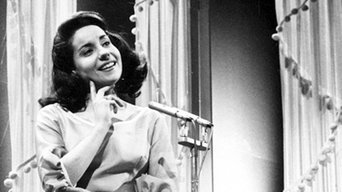 S5 · E1Eurovision Song Contest Grand Prix 1960 1960-03-29 · 80 min
The capital of the United Kingdom, London, provided the setting for the fifth Eurovision Song Contest. This was despite the fact that the Netherlands actually won the Eurovision Song Contest in Cannes the year before with Een Beetje, performed by Teddy Scholten. Following the victory the Dutch national broadcaster did not want to host the contest again so the honour went to the UK which had finished second the year before.
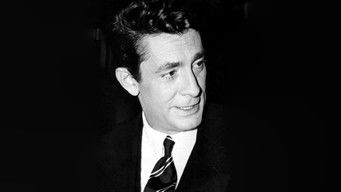 S6 · E1Eurovision Song Contest Grand Prix 1961 1961-03-18 · 95 min
Just like in 1959, the Palais des Festivals was the venue of this year's contest. The presenter of the show was Jacqueline Joubert, who already did this task in 1959. The stage used for the show was much bigger than in previous years, and it was magnificently decorated with flowers. The number of participants of this year’s song contest rose to 16 as Spain, Yugoslavia and Finland all made their respective debuts. For the first time, the contest took place on a Saturday night which would come to be the contest's home.
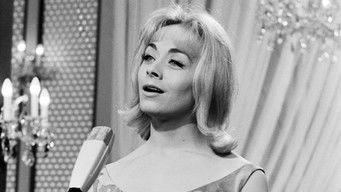 S7 · E1Eurovision Song Contest Grand Prix 1962 1962-03-18 · 84 min
After the victory in Cannes in 1961, Luxembourg was the host of the seventh Eurovision Song Contest. The stage was decorated with twinkling stars, but unfortunately they could not be seen for parts of the evening because there were some problems with the lights in the big auditorium of the Villa Louvigny. The number of participants of this year's contest remained stable at 16 with no new countries entering. However, there was a change in the voting system: the national juries - which still consisted of 10 people - had to attribute 3, 2 and 1 points to their three favourite songs.
 S8 · E1Eurovision Song Contest Grand Prix 1963 1963-03-23 · 95 min
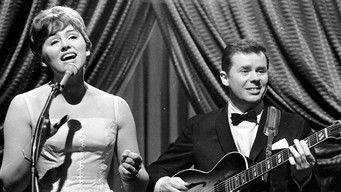
The UK hosted the song contest after France declined, having recently hosted twice (1959 & 1961). The competition featured international stars like Esther Ofarim (Switzerland), Nana Mouskouri (Luxembourg), and Francoise Hardy (Monaco). Host broadcaster BBC used an innovative approach: songs were performed in one studio while the audience watched from another. Each performance had unique, rapidly changed staging, sparking untrue rumours that the songs were pre-recorded. A voting controversy erupted when the Norwegian jury spokesperson, caught unprepared by presenter Katie Boyle, gave a rushed, incorrect set of points. Following the rules, Boyle returned to the Norwegian jury after all other countries had voted. Their corrected final results were decisively different from the interim ones, handing victory to their Nordic neighbour, Denmark, in a close race with Switzerland.
 S9 · E1Eurovision Song Contest Grand Prix 1964 1964-03-21 · 95 min
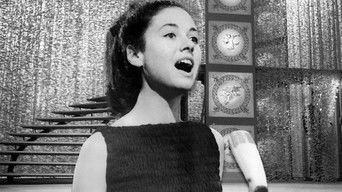
The 1964 Eurovision Song Contest took place in the famous Tivoli Concert Hall in Copenhagen. The event became highly politicised with demands that right-wing dictatorships in Spain and Portugal should be excluded from the contest. There was even some trouble during the contest as just before the Belgian entry, a man entered the stage holding a banner saying "Boycott Franco and Salazar". He was quickly removed from the stage. As in the three previous contests, 16 countries participated in the competition. Portugal made its debut whilst Sweden chose not to enter. Germany, Portugal and Switzerland each scored zero points for the first time. In the case of Portugal, it was the first time in the history of the contest that a newcomer did not receive any points at all.
 S10 · E1Eurovision Song Contest Grand Prix 1965 1965-03-20 · 98 min
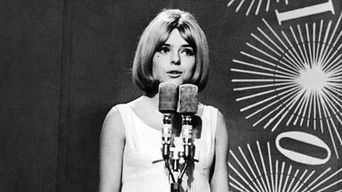
Italy and its national broadcaster RAI hosted this year's contest for the first time. 18 countries took part, at that point, the number of participants ever. After a year of absence, Sweden returned to the competition and Ireland debuted. Belgium, Germany, Finland and Spain all scored nul points while Luxembourg won for the second time with the highly controversial Poupée De Cire, Poupée De Son sung by teenager France Gall. The song went on to become a massive hit in almost all European countries and had a major impact on the type of songs entered into the contest in the following years. Swedish participant Ingvar Wixell performed his song -originally called Annorstädes Vals - in English instead of Swedish while all the other participants sang in their native languages. This incident led to a rule change meaning that all participants would have to perform their songs in their respective national languages.
 S11 · E1Eurovision Song Contest Grand Prix 1966 1966-03-05 · 85 min
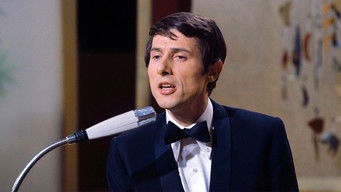
The capital city of Luxembourg was the home of the 11th Eurovision Song Contest. The rules for the contest were changed and national juries could include music experts again. The major change was that a rule was introduced stipulating that songs had to be performed in one of the official languages of the participating country. During the dress rehearsal, the Italian participant Domenico Modugno was not satisfied with the orchestra and left the stage in anger. It was uncertain if he was going to perform during the live show, but he sang his song Dio Come Ti Amo after all. The song later became a huge success in South America for Gigliola Cinquetti, the winner of the 1964 Eurovision Song Contest.
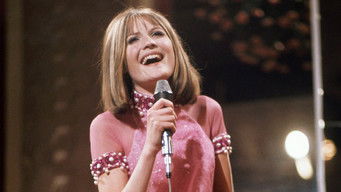 S12 · E1Eurovision Song Contest: Grand Prix 1967 1967-04-08 · 107 min
The 1967 Eurovision Song Contest took place at the Großer Festsaal der Wiener Hofburg in Vienna. The number of participants went down from 18 to 17 because Denmark chose to withdraw from the contest and would not come back to the contest until 1978. The contest had a very glamorous setting: the stage included three revolving mirrors and a staircase entrance in the middle. The juries had undergone a change as well, as half of the jurors in every national jury had to be less than 30 years old. During the voting the presenter of the show, Erika Vaal, declare the United Kingdom winner of the song contest before the last jury's votes were cast. However, the confusion about the voting would not make any difference: the United Kingdom clearly won the Eurovision Song Contest for the first time, nine years after participating for the first time. The winning entrant Sandy Shaw performed her song, Puppet on a String, barefoot.
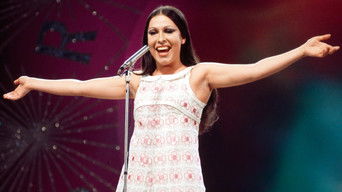 S13 · E1Eurovision Song Contest Grand Final: 1968 1968-04-06 · 96 min
France, Germany, the Netherlands, Norway, Sweden, Switzerland and the United Kingdom broadcast the 1968 contest in colour despite the fact that very few TV-viewers at home owned a colour TV set. However, colour was here to stay and all song contests since then have been broadcast primarily in colour. Some countries hired foreign singers to sing for them: Germany was represented by Norwegian Wenche Myhre and Austria's entry was performed by Karel Gott from Prague.
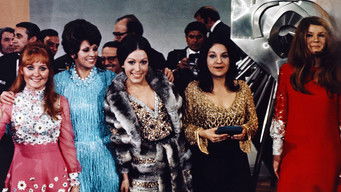 S14 · E1Eurovision Song Contest: Grand Prix 1969 1969-03-29 · 106 min
For the first time in the history of the Eurovision Song Contest, the outcome of the voting resulted in a tie for first place. Four countries gained 18 points each: France, the Netherlands, Spain and the United Kingdom. Since there was no solution for this situation, all four countries were declared winners. Luckily, there were four medals available to the four winning singers - the four medals were originally intended for the winning singer and three winning songwriters.
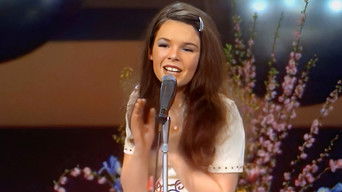 S15 · E1Eurovision Song Contest for the Grand Prix of 1970 1970-03-21 · 74 min
There were plenty of host countries to choose from as a result of the four-way tie in 1969; the Netherlands, the United Kingdom, France and Spain. Eventually, Amsterdam was chosen to host the fifteenth Eurovision Song Contest by the drawing of lots. For the second year in a row, the number of participants went down. Finland, Norway, Sweden and Portugal were all dissatisfied about the voting in the 1969 contest when 4 countries were declared winners and withdrew from the contest. To ensure that a similar incident did not happen again a tie rule was created. The rule stated that if two or more songs gained the same number of points, each song had to be performed once more. After these performances, the juries (with the exception of the countries that had tied) had to select their favourite song. This had to be done by the showing of hands. If entries still were to tie, both of them would share the first position.
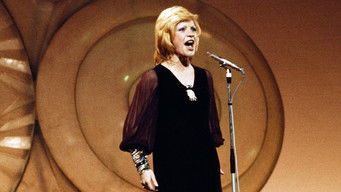 S16 · E1The Eurovision Song Contest for the Grand Prix 1971 1971-04-03 · 106 min
For the first time in the history of the Eurovision Song Contest, Ireland hosted the event at the Gaiety Theatre in Dublin. Compared to 1970, the number of participants rose to 18 as Finland, Norway, Sweden and Portugal all returned to the contest after a year of absence. Malta also made its debut. The contest was broadcast in 29 countries. The rule of performing either as single or duet was abolished: now groups of up to six people were allowed to perform. In this year's Eurovision Song Contest, a new voting system was created: two jury members - one of them had to be younger than 25 - had to award between 1 and 5 points to each song. This created some problems because some juries gave fewer points than others. For example, Luxembourg awarded 43 points altogether compared to France's 107! In theory this meant that jury members could vote tactically, awarding few points and hoping to gain many.
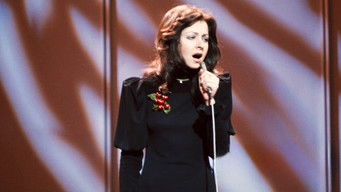 S17 · E1Eurovision Song Contest 1972 1972-03-25 · 105 min
The BBC stepped in to host the Eurovision Song Contest in 1972 and chose a venue outside of London for the first time. The contest was broadcast live to Asia for the first time with viewers in Japan, Taiwan, The Philippines, Hong Kong and Thailand, all able to watch the show. It also was the first year that a video wall was used to present song titles and artists.
 S18 · E1Eurovision Song Contest 1973 1973-04-07 · 101 min
For the third time in the 18-year-old history of the Eurovision Song Contest, Luxembourg had the honour of hosting the event with 17 nations present. After ending up in last position two years in a row, Malta decided to withdraw from the contest. Austria decided not to participate either. Instead, a new country joined the song contest, Israel. It was the first non-European country to enter the contest. Israel was allowed to do so because the country was already a member of the European Broadcasting Union. With the Israelis participating, the security control was unusually tight and special security measures were put in place for the Israeli delegation. Another important rule change for the 1973 Eurovision Song Contest was that the participants could choose the language in which they wanted to sing their songs. This rule remained in place until 1976 before being re-introduced in 1999.
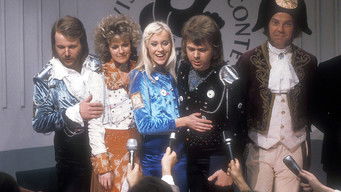 S19 · E1Eurovision Song Contest 1974 1974-04-06 · 109 min
1974 saw the first participation of Greece who sent their national star Marinella. France was to enter the song contest with the entry La Vie A Vingt-cinq Ans by Dani, but the French singer never got the chance to perform though as the French president, Georges Pompidou, died in the week of the contest and France withdrew. The voting system changed once more: 10 jury members in every country each awarded one point to their favourite song. For the first time, a draw of lots was used to decide the order in which countries would give the results of their juries. However, it was the last time this method was used to cast the votes - from 1975 onwards, a new voting system would be implemented where the order of the jury votes followed the order of performance.
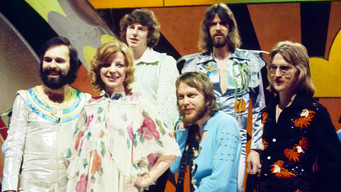 S20 · E1Eurovision Song Contest 1975 1975-03-22 · 133 min
A new voting system, still in place today, was implemented in 1975. Juries in each country awarded points to their top 10 songs: 12 to their favourite, 10 to the second, 8 to the third, and then from 7 down to 1. A record 19 countries took part. France and Malta returned to the contest and Turkey made its debut, while Greece withdrew. Norway's Ellen Nikolaysen performed for a rare third consecutive year. Portugal's entry was highly political, as singer Duarte Mendes dedicated his song to the country's peaceful revolution the previous year. Germany’s entry, Ein Lied Kann Eine Brücke Sein performed by Joy Fleming, saw a disappointing 17th place finish. However, the song has since become a major favourite among fans.