
Seasons & episodes
 S21 · E1Eurovision Song Contest 1976-04-03 · 131 min
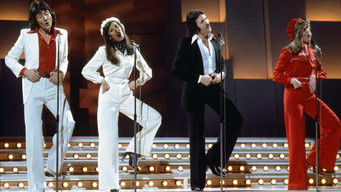
After being host of the 1975 Eurovision Song Contest, Sweden withdrew from the contest as Swedish TV thought that the contest had become too commercial. They were also afraid of winning again and having to host the expensive show so soon. Turkey and Malta withdrew as well, but Greece and Austria returned. 18 countries participated in the 1976 song contest altogether. Former Dutch Eurovision Song Contest winner Corry Brokken hosted the contest. The orchestra rules changed this year. For the first time, instrumental playback was allowed if certain passages in the music could not be reproduced by the live orchestra. Most of the countries decided to sing in English hoping that they might earn a better placing with this. The Yugoslav entry was sung by Ambassadori and it marked the last Yugoslav entry for five years - the country would only come back in 1981.
 S22 · E1Eurovision Song Contest 1977 1977-05-07 · 132 min
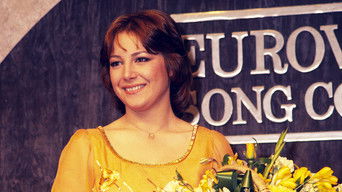
The 1977 Eurovision Song Contest took place at London's Wembley Conference Centre but was postponed for five weeks due to a strike by cameramen and technicians, moving from April 2nd to May 7th. 18 countries participated. Sweden returned, while Yugoslavia withdrew. Tunisia was also set to make its debut but withdrew its entry before the contest. The rule requiring participants to sing in their national language was reinstated. However, Germany and Belgium were granted an exception to perform in English because their entries had been selected before the rule was changed. Germany's entry, "Telegram" by the popular group Silver Convention, was highly anticipated but only finished in 8th place. Other notable acts included Austria's Schmetterlinge, who performed "Boom Boom Boomerang" while wearing masks on the backs of their heads, and Anita Skorgan, who made her debut for Norway with the song "Casanova".
 S23 · E1Eurovision Song Contest 1978 1978-04-22 · 146 min
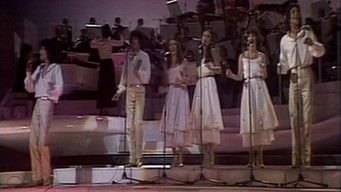
For the third time in Eurovision Song Contest history, the event was held in France. After having hosted the two previous contests in Cannes, French Television decided to host it in the capital Paris. A record 20 countries participated in 1978. Denmark returned to the contest after an 11 year absence. Turkey also participated, and no country withdrew from the previous year. For the first time, the show was presented by two people; Denise Fabre and Léon Zitrone. It was the first time contest was broadcast live in Dubai.
 S24 · E1Eurovision Song Contest 1979 1979-03-31 · 177 min
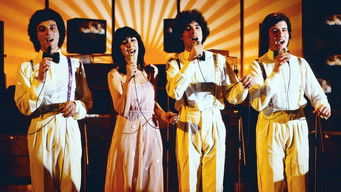
Jerusalem hosted 19 delegations. Turkey withdrew from the contest due to pressure from several Arab countries because the event took place in Israel. There were lots of familiar faces in 1979. Peter, Sue & Marc returned for Switzerland, 1973 winner Anne-Marie David represented France, and Anita Skorgan sang again for Norway. Germany's entry, Dschinghis Khan, became a hit across Europe despite being heavily criticised at home. The Swiss contestants also had difficulties, having to explain to customs why their unique performance required watering cans, hoses, and bottle openers. Belgian singer Micha Marah was so unhappy with her song "Hey Nana," which was selected against her will, that she refused to record a studio version. Meanwhile, after finishing 16th, Monaco withdrew from the contest and would not return for another 25 years, until 2004.
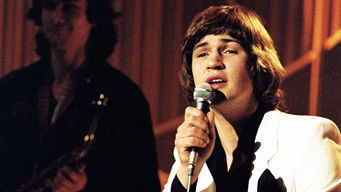 S25 · E1Eurovision Song Contest 1980 1980-04-19 · 137 min
The Hague was once again the host city for the song contest after both Israel and the United Kingdom declined to stage the contest after Israel declined the opportunity to host the show twice in succession. As a result of these delays, the 1980 contest was hastily arranged and Dutch TV NOS had to re-use most of the stage from 1976, the last time they hosted the contest. NOS picked 19th April as the date for the song contest, but as this was the Holocaust Memorial Day in Israel, the defending champion decided not to participate which marked the only time when the winner of one Eurovision Song Contest did not participate in the next.
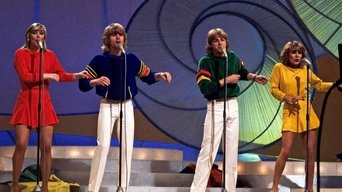 S26 · E1Eurovision Song Contest 1981 1981-04-04 · 152 min
For the second time, the Eurovision champion winner, Ireland, was the host for the event which took place in Dublin. In 1981, the total amount of participating countries was 20 once again equalling the record set three years earlier in Paris. Morocco withdrew after their first participation, and Italy decided to stay at home as well because the interest in the country had diminished. Yugoslavia returned to the contest after five years of absence, so did Israel after the county had missed out on one contest. Finally, Cyprus made its Eurovision debut. It was also the first year Egypt's television viewers could follow the contest live on television. The opening sequence of the 1981 Eurovision Song Contest showed 'old Ireland' blending into 'modern Ireland'. The sequence ended with a map of Europe on a globe which span round to reveal the Eurovision logo.
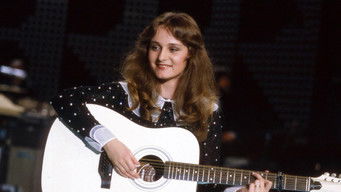 S27 · E1Eurovision Song Contest 1982 1982-04-24 · 131 min
Harrogate, the host city of the 1982 Eurovision Song Contest, was largely unknown to international viewers, something that was not lost on the BBC. The opening sequence of the show included the question "Where is Harrogate" in the languages of the participating countries. France withdrew from the contest only to return a year later with a different broadcaster. Greece also withdrew from the contest, leaving 18 countries in the competition. Greece was supposed to enter the contest with the song Sarantapente Kopelies performed by Themis Adamantidis but the Greek Minister of Culture Melina Mercouri decided to withdraw the song just two weeks before the contest as was unhappy with it.
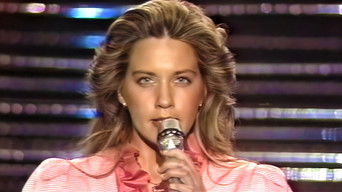 S28 · E1Eurovision Song Contest 1983 1983-04-23 · 185 min
In 1983 the Eurovision Song Contest was held in Germany for the first time since 1957. The host for the evening was Marlene Charell who presented the show in three languages, German, French and English. Due to the trilingual presentation, the contest lasted more than 3 hours for the first time ever. The total number of participants rose to 20 again as Italy, France and Greece returned. This year marked the first performance of Sweden's Carola Häggkvist who reached third place and went on to win the contest in 1991 and represented her country again in 2006, coming fifth. Her song Främling became very popular in Sweden, perhaps even more than her winning song from 1991. For France's Guy Bonnet, it was the second time he represented his country. After coming 4th in 1970, he ended up 6th in 1983. For Italian superstar Riccardo Fogli, the 1983 contest ended with disappointment; after winning the prestigious San Remo festival the year before, he only ended up 11th with his song Per Lucia.
 S29 · E1Eurovision Song Contest 1984 1984-05-05 · 134 min
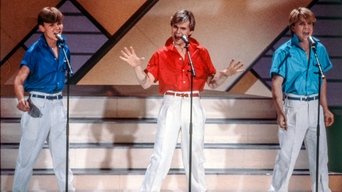
After having held the contest last in 1973, Luxembourg played the host for the 1984 Eurovision Song Contest. The total number of participants was 19, one country less than in the preceding year as Greece decided not to enter a song. The contest also clashed with Israel's Remembrance Day, so the country wasn't present in Luxembourg either. Ireland returned to the contest though, finishing second. The Irish song was written by former Eurovision winner, Johnny Logan, under his real name Sean Sherrard. The song Terminal 3 was performed by Linda Martin, who later returned to win the Eurovision Song Contest in 1992.
 S30 · E1Eurovision Song Contest 1985 1985-05-04 · 166 min
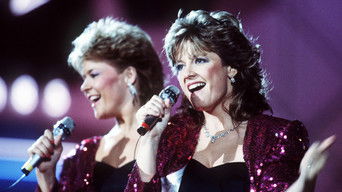
The city of Gothenburg was chosen by the Swedish broadcaster to be host city to the 1985 Eurovision Song Contest. This year, the Netherlands chose to withdraw from the contest because it collided with the country's national Remembrance Day. Yugoslavia also decided to stay home because of a national holiday. Israel and Greece returned to the contest so the number of participants was 19 again, just as in the previous year. The set in Gothenburg's Scandinavium was very modern and bigger than any venue before. Parts of the set would later be re-used for the Swedish national final, Melodifestivalen, in 1987.
 S31 · E1Eurovision Song Contest 1986 1986-05-03 · 163 min
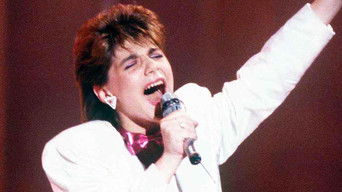
For the first time, Norway had the honour of hosting the 31st Eurovision Song Contest. Just like in Munich three years earlier, 20 countries participated in the contest. The Netherlands and Yugoslavia returned, Italy and Greece withdrew from the from the contest and Iceland made its debut. Iceland had wanted to participate for some years but the small Atlantic island nation had to wait until a satellite connection to Iceland could be established. The 1986 Eurovision Song Contest also marked a historic landmark as the 500th Eurovision song was performed in Bergen - Luxembourg's entry L'Amour De Ma Vie by Canadian-born Sherisse Laurence. The presenter of the 1986 Eurovision Song Contest, Åse Kleveland, had already participated as a singer for her home country in 1966 where she was placed 3rd. She had also presented the Norwegian national final in 1980.
 S32 · E1Eurovision Song Contest 1987 1987-05-09 · 179 min
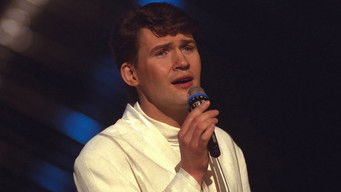
Belgium had the honour of hosting the 1987 Eurovision Song Contest for the first time in the country's history. The highest number of participants ever, 22, entered the contest in 1987. Greece and Italy returned to the contest after a year of absence. The 1986 contest was won by a Walloon entry, but in 1987 the Flemish broadcaster, BRT, was responsible for the Belgian entry. BRT also wanted to co-organise the contest, but the Walloon broadcaster, RTBF decided to organise the event on its own. The presenter of the 3-hour-show was the successful Belgian artist Viktor Laszlo who opened the contest presenting her latest song Breathless.
 S33 · E1Eurovision Song Contest 1988 1988-04-30 · 171 min
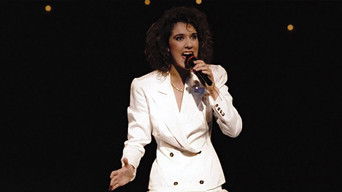
The 1988 Eurovision Song Contest was hosted in Dublin for the third time, 21 countries competed for the trophy. Host broadcaster RTE introduced a modern set, at that point the largest in the history of the contest. Two giant video walls and a computerised scoreboard were also unveiled. At the time, it was a ground breaking production and set the standard for future editions of the contest. Denmark was represented the group Hot Eyes who performed in the contest for the third time. Lead singer Kirsten was heavily pregnant at the time and gave birth just three weeks after the contest.
 S34 · E1Eurovision Song Contest 1989 1989-05-06 · 190 min
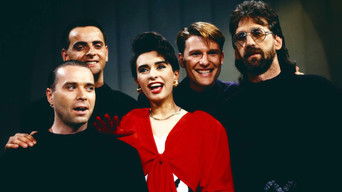
Switzerland hosted the contest for the first time since the inaugural event in 1956. The show was opened by the previous year's winner, Céline Dion. She performed a reprise of her winning song, "Ne Partez Pas Sans Moi," and her new English single, "Where Does My Heart Beat Now," which became her first major hit in the United States. Italy sent its recent San Remo festival winners, Fausto Leali and Anna Oxa. The entries for both Germany and Austria were composed by German pop titan Dieter Bohlen, famous as part of the 1980s duo Modern Talking. A linguistic milestone was set by the host country's entry. The song "Viver Senza Tei" by the group Furbaz was the first ever to be sung in Romansch, one of Switzerland's four official languages.
 S35 · E1Eurovision Song Contest 1990 1990-05-05 · 187 min
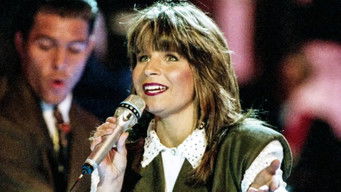
22 countries participated in the 1990 Eurovision Song Contest, the same line up as in 1989. Many of the songs reflected the wider political developments that were taking place in Europe. The Spanish performance was beset by technical problems. First the backing track failed to play, then it started too early. The delegation's conductor completely lost control and the Spanish duo, Azúcar Moreno, left the stage. The second attempt was successful and the duo ended up in fifth place. Eurovision veteran, Serge Gainsbourg, wrote the French entry White And Black Blues performed by Joelle Ursull which finished in second place along with Ireland's song Somewhere in Europe.
 S36 · E1Eurovision Song Contest 1991 1991-05-04 · 193 min
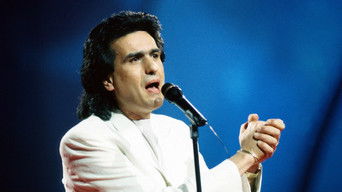
The 1991 Eurovision Song Contest was supposed to be held in the seaside resort San Remo which is known for its annual festival of Italian music, but host broadcaster RAI moved it to Rome at a very late stage due to ongoing instability in the Balkan region. For the second time since the very first Eurovision Song Contest in 1956, the Netherlands decided to withdraw from the contest due to the country's Remembrance Day. Malta took the open spot which meant that the country was back for the first time since 1975. The contest was presented by Toto Cutugno, who won for Italy the previous year. Toto was joined on stage by Italy's other winner, Gigliola Cinquetti, who won the contest in 1964. For the majority of the show the presenters spoke solely in Italian.
 S37 · E1Eurovision Song Contest 1992 1992-05-02 · 190 min
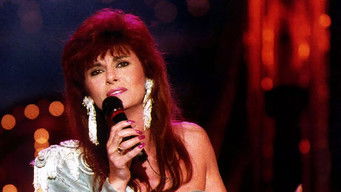
A new record of participating countries was set in 1992 as the Netherlands returned to the contest and Malta continued to participate. The venue for the show was the MalmöMässan, a large exhibition and conference centre. The stage was in the shape of a Viking ship's bow and the floor design was an adaption of the EBU's Eurovision logo.
 S38 · E1Eurovision Song Contest 1993 1993-05-15 · 190 min
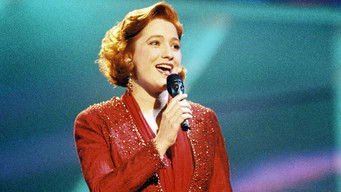
The 1993 Eurovision Song Contest, held in Millstreet, a small town in South West Ireland, home to 1500 people, was an ambitious production for national broadcaster RTE. The 1993 contest is to date, the only competition in Ireland that has been held outside of the capital Dublin. The early 1990s were a time of massive change in Europe. These changes were reflected in the Eurovision Song Contest as newly sovereign nations took to the stage. In order to accommodate the growing number of countries eager to participate in the Eurovision Song Contest, a pre-selection,Kvalifikacija za Millstreet, took place in Ljubljana, Slovenia ahead of the contest in which seven countries competed. Three countries made their respective debuts; Bosnia & Herzegovina, Croatia and Slovenia.
 S39 · E1Eurovision Song Contest 1994 1994-04-30 · 183 min
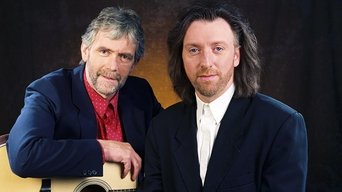
In 1994 seven countries joined the Eurovision Song Contest in what was the biggest single expansion in participants since the contest began in 1956. Estonia, Hungary, Lithuania, Poland, Romania, Russia and Slovakia all competed in the 39th Eurovision Song Contest in Dublin. Poland's debut at the Eurovision Song Contest was very successful when their representative Edyta Gorniak finished second with 166 points. The interval act in 1994 was the then unknown Riverdance, an act which combined traditional Irish folk music with modern dance. Riverdance became a global phenomenon, with the exception of participating artists, it is arguably the biggest money-spinner ever created by Eurovision. Lithuania scored zero points with its first ever entry.
 S40 · E1Eurovision Song Contest 1996 1995-05-13 · 170 min
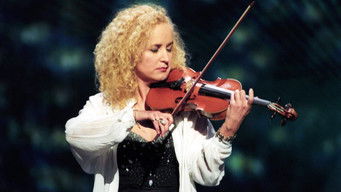
1995 was the first time ever that the Eurovision Song Contest took place in the same city for two years in a row. In 1994, the European Broadcasting Union decreased the number of participants to 23 to make sure that the song contest would not last longer than three hours. All of the five relegated countries from the preceding year - Turkey, Slovenia, Israel, Denmark and Belgium - returned to the contest. In contrast, the bottom seven countries of the 1994 Eurovision Song Contest were relegated: Lithuania, Estonia, the Netherlands, Finland, Romania, Slovakia and Switzerland.
 S41 · E1Eurovision Song Contest 1996 1996-05-18 · 189 min
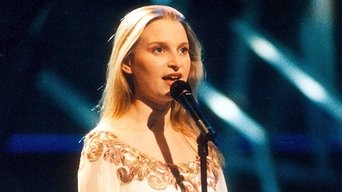
In 1996, the EBU replaced its relegation system with an audio pre-selection. Juries listened to recordings from 29 countries to choose 22 finalists to join host Norway. Germany, Russia, Denmark, Hungary, Israel, Romania, and FYR Macedonia all failed to qualify for the final in Oslo. The contest was groundbreaking, with host broadcaster NRK using virtual reality in the voting and digital filters during some performances. Each participant also received a televised good luck message from a political figure from their country, ranging from junior ministers to presidents. The show was briefly threatened by a conductor's strike after NRK planned to cut their on-screen appearances to save time, though the dispute was settled amicably. The hosts were Morten Harket, lead singer of A-ha, and journalist Ingvild Bryn.
 S42 · E1The Eurovision Song Contest 1997 1997-05-03 · 190 min
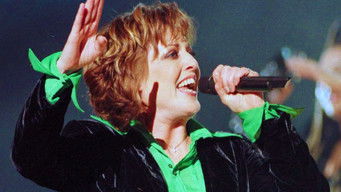
Ireland hosted the Eurovision Song Contest for the fourth time in five years, a record for broadcaster RTÉ. 25 countries participated. The audio preselection from the previous year was replaced by a new system determining participation based on a country's average results over the last five contests. Israel withdrew voluntarily, allowing Bosnia & Herzegovina to take their place, while Belgium, Finland, Romania, and Slovakia were absent. For the first time, televoting was introduced as a trial in five countries: the United Kingdom, Sweden, Austria, Switzerland, and Germany. It would be expanded to most participating nations the following year. The show aimed to attract a younger audience, with Irish boy band Boyzone performing as the interval act and their lead singer, Ronan Keating, co-hosting the event. The opening sequence featured video messages from past contestants, including Céline Dion.
 S43 · E1The Eurovision Song Contest 1998 1998-05-09 · 195 min
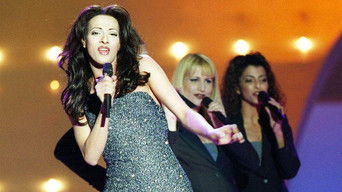
In the 1998 Eurovision Song Contest, 25 countries competed. FYR Macedonia made its debut, and nations relegated in 1997 returned. However, Italian broadcaster RAI withdrew from the contest indefinitely. This year marked the first large-scale use of televoting, with national juries only used in countries that lacked a fully functional telephone system. A notable glitch occurred with the Spanish televote; their 12 points, intended for Germany, were mistakenly announced for Israel during the broadcast. The error was corrected shortly after the show. It was a taboo-breaking contest, highlighted by the performance of Israel's Dana International, a transsexual woman, who sang "Diva". Germany also sent an unconventional act, Guido Horn, who famously climbed all over the stage equipment during his wild performance. Due to low five-year average scores, Austria, Bosnia & Herzegovina, Denmark, Russia, and Iceland were relegated and did not compete the following year.
 S44 · E1The Eurovision Song Contest 1999 1999-05-29 · 194 min
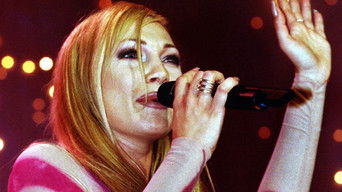
In 1999, France, Germany, Spain, and the UK became automatic qualifiers as the highest-paying EBU members. Contestants were also free to perform in any language, a rule not seen since the 1970s. In a controversial move, the orchestra became optional, meaning all entries performed to a backing track for the first time. Latvia withdrew late, and after Hungary declined the offer to participate, the final spot went to Portugal. Meanwhile, Finland, Greece, FYR Macedonia, Romania, and Switzerland were unable to compete due to low average scores in previous years. The Cypriot entry, a pre-contest favourite, received only two points. After the show, Croatia was sanctioned for using synthesized backing vocals against the live-vocal rule. As a penalty, they lost 33% of their points, which negatively impacted their five-year average score.