
Seasons & episodes
 S45 · E1The Eurovision Song Contest 2000 2000-05-13 · 180 min
24 countries participated in the contest in 2000. Poland, Portugal, Slovenia, Lithuania, Romania and Bosnia & Herzegovina were all relegated due to their lower average scores. Greece was initially supposed to take part but withdrew. Latvia made its debut this year with the entry My Star performed by the group Brainstorm, finishing in third position. Estonia finished fourth with Ines' Once In A Lifetime which was the bookmaker's favourite. Internet polls also had the United Kingdom's Nicki French and Linda Wagenmakers from the Netherlands as favourites but these countries only finished 16th and 13th respectively. 13,000 spectators were at the final in the Globen Arena in Stockholm, which was a new record. Swedish broadcaster SVT produced a slick show and provided a new look and feel for the contest as it entered the new millennium.
 S46 · E1The Eurovision Song Contest 2001 2001-05-12 · 190 min
23 countries participated in the 2001 Eurovision Song Contest. Bosnia & Herzegovina, Poland, Portugal, Slovenia, Lithuania and Greece all returned to the contest, replacing the seven countries with the lowest average result in the past five contests: Romania, Switzerland, FYR Macedonia, Finland, Belgium, Austria and Cyprus. The spectator record from the previous year in Stockholm was already broken in 2001 as nearly 35,000 attended the show in the Parken Stadium in Copenhagen. France, Greece and Slovenia were predicted to win this year but Estonia took everyone by surprise by taking the trophy.
 S47 · E1The Eurovision Song Contest 2002 2002-05-25 · 178 min
Immediately after Estonia won the 2001 Eurovision Song Contest the media began to speculate whether the country would be able to host the competition in 2002, citing a lack of a suitable venue and budgetary concerns. Estonian Television defied the critics though and produced a professional show in Tallinn. 23 countries participated in 2002. Latvia entered the contest after Portugal declined the opportunity to participate. This was a rather peculiar situation, since Latvia ended up winning the whole contest in the end! There was no clear favorite among the 24 countries competing. Sweden, Germany and the host country Estonia were tipped as winners, but it was Marie N (Marija Naumova) who lifted the trophy.
 S48 · E1The Eurovision Song Contest 2003 2003-05-24 · 190 min
A record 26 countries took part in the Eurovision Song Contest in the Latvian capital Riga. The slogan for 2003 was Rendezvous in Riga. Ukraine made its debut in the competition and sent one of the country's biggest stars, Olexandr Ponomariov. Pop duo t.A.T.u. who only month before the contest had a major worldwide hit with All The Things She Said, represented Russia in Riga. The pair caused mischief during the event week by regularly disrupting the rehearsal schedule and failing to attend press conferences. Turkey won the contest for the first time after one of the closest finishes in the contest for years. Slovenia, the last country to deliver its results, had the casting vote. Belgium finished second with Russia in third place.
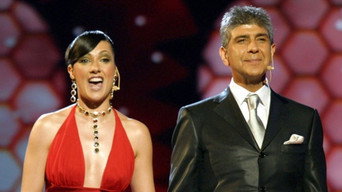 S49 · E1Semi-final 2004-05-12 · 120 min
In 2003, it was decided that a Semi-Final would be held in 2004 with only the so-called 'Big Four' (Germany, UK, France and Spain) plus the ten most successful countries from the 2003 ranking having a place in the Final. Ten remaining countries would qualify from the Semi-Final, which was held on the Wednesday prior to the Eurovision Song Contest Final night on Saturday. 22 countries decided to took part in the 2004 Semi-Final, all countries used telephone and SMS voting. Several new countries entered in 2004; Andorra, Albania and Belarus along with Serbia & Montenegro. Monaco returned to the contest after a 25-year absence.
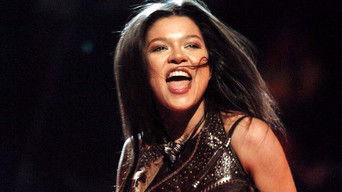 S49 · E2Final 2004-05-15 · 196 min
Ten countries qualified from the Semi-Final: Serbia & Montenegro, Ukraine, Greece, Albania, Cyprus, the Netherlands, Bosnia & Herzegovina, Malta, Croatia and FYR Macedonia. Greece sent one of its biggest stars to Istanbul, Sakis Rouvas, who gave an energetic performance of his song Shake It. Similarly Serbia & Montenegro was represented by a singer who was big in the Balkans, Željko Joksimović.
 S50 · E1Semi-final 2005-05-19 · 138 min
No episode summary available yet.
 S50 · E2Final 2005-05-21 · 206 min
No episode summary available yet.
 S51 · E1Sem-final 2006-05-18 · 141 min
No episode summary available yet.
 S51 · E2Final 2006-05-20 · 183 min
No episode summary available yet.
 S52 · E1Semi-final 2007-05-10 · 160 min
No episode summary available yet.
 S52 · E2Final 2007-05-12 · 193 min
No episode summary available yet.
 S53 · E1Semi-final 1 2008-05-20 · 122 min
No episode summary available yet.
S53 · E2Semi-final 2 2008-05-22 · 120 min
No episode summary available yet.
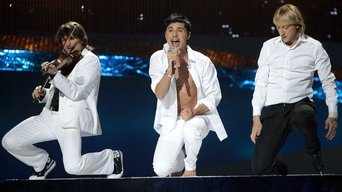 S53 · E3Final 2008-05-24 · 196 min
This is the Grand Final of the Eurovision Song Contest 2008, live from Belgrade the capital of Serbia! For the first time in the history of the Eurovision Song Contest, two Semi-Finals were held to decide which 25 countries would be represented in the Final. The Final of the contest took place on the 24th of May, just like the first ever Eurovision Song Contest in 1956.
 S54 · E1Semi Final 1 2009-05-12 · 120 min
No episode summary available yet.
 S54 · E2Semi Final 2 2009-05-14 · 120 min
No episode summary available yet.
 S54 · E3Final 2009-05-16 · 196 min
No episode summary available yet.
 S55 · E1Semi Final 1 2010-05-25 · 119 min
No episode summary available yet.
 S55 · E2Semi Final 2 2010-05-27 · 120 min
No episode summary available yet.
 S55 · E3Final 2010-05-29 · 191 min
No episode summary available yet.
S56 · E1Semi Final 1 2011-05-10 · 129 min
No episode summary available yet.
S56 · E2Semi Final 2 2011-05-12 · 120 min
No episode summary available yet.
S56 · E3Final 2011-05-14 · 208 min
After Lena Meyer-Landrut's victory in Oslo, the Eurovision Song Contest 2011 travelled to Düsseldorf in Germany. It was the first time since 1983 that Germany hosted the contest. A total of forty-three countries took part in the 2011 contest held in Düsseldorf. The city emerged as the winner of an open selection process which saw several cities compete for the right to host the Eurovision Song Contest. The biggest news of this contest was the return of Italy, after more than ten years. Italy joined France, Germany, Spain and the United Kingdom to form the so-called Big Five countries that have automatic qualification to the Grand Final. One of the most famous German comediennes, Anke Engelke, TV anchor Judith Rakers and all-round showman Stefan Raab hosted the event. Raab had also been part of Lena’s winning team in 2010.