
Seasons & episodes
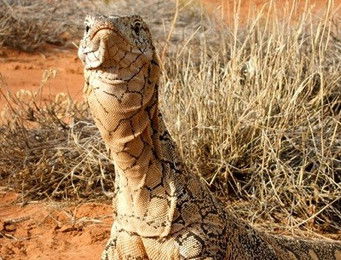 S37 · E3Lizard Kings 2009-10-20 · 55 min
Though they may look like dragons and inspire stories of man-eating, fire-spitting monsters with long claws, razor-sharp teeth and muscular, whip-like tails, these creatures are actually monitor lizards, the largest lizards to walk the planet. With their acute intelligence — including the ability to plan — these lizards are a very different kind of reptile, blurring the line between reptiles and mammals. And even though these bizarre reptiles haven’t changed all that much since the dinosaurs, they are a successful species, versatile at adapting to all kinds of settings. “Lizard Kings” looks at what makes these tongued reptiles so similar to mammals and what has allowed them to become such unique survivors. But while the creatures can find their way around many different habitats, finding them is no easy task. Natural loners, and always on guard, they sense anything or anyone from hundreds of feet away. NOVA follows expert lizard hunter Dr. Eric Pianka as he tracks the elusive creatures through Australia’s heartland with cutting-edge “lizard cam” technology for an unparalleled close encounter with these versatile “living dragons.”
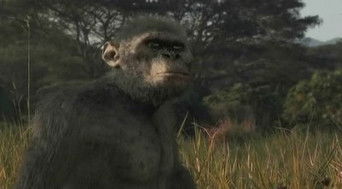 S37 · E4Becoming Human: First Steps 2009-11-03 · 55 min
The first hour examines the factors that caused the split from the apes. The film explores the fossil of “Selam,” also known as “Lucy’s Child” — an amazing, nearly complete child fossil that helps shed light on our ancestors’ early development and how we began to depart from that of chimps.
 S37 · E5Becoming Human: Birth of Humanity 2009-11-10 · 55 min
In gripping forensic detail, the second program in “Becoming Human” investigates the first skeleton that really looks like us — “Turkana Boy” — an astonishingly complete specimen of Homo erectus found by the famous Leakey team in Kenya.
 S37 · E6Becoming Human: Last Human Standing 2009-11-17 · 55 min
The final program examines the roots of our own species, Homo sapiens, which new evidence pinpoints to southern Africa some 200,000 years ago. New discoveries are upending old ideas and suggesting that our exodus from Africa was far earlier than previously thought.
 S37 · E7What Are Dreams? 2009-11-24 · 55 min
What are dreams and why do we have them? Are they a window into a hidden realm within us? Science is only just beginning to understand. NOVA joins the leading dream researchers and witnesses the extraordinary experiments they use to investigate the world of sleep. From human narcoleptics to sleepwalking cats, from recurrent nightmares to those who can’t dream, each sequence contains a vital clue to the question these scientists are pursuing: Why do we dream?
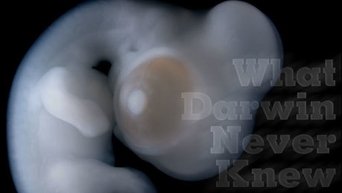 S37 · E8What Darwin Never Knew 2009-12-29 · 55 min
NOVA takes viewers on a journey from the Galapagos Islands to the Arctic, and from the Cambrian explosion of animal forms half a billion years ago to the research labs of today. Here scientists are finally beginning to crack nature’s biggest secrets at the genetic level. And, as NOVA shows in this absorbing detective story, the results are confirming the brilliance of Darwin’s insights while exposing clues to life’s breathtaking diversity in ways the great naturalist could scarcely have imagined.
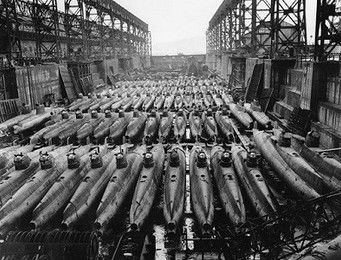 S37 · E9Killer Subs in Pearl Harbor 2010-01-05 · 55 min
NOVA dives beneath the waters of Pearl Harbor to trace provocative new clues to one of the most tragic events of World War II -- the sinking of the USS Arizona.
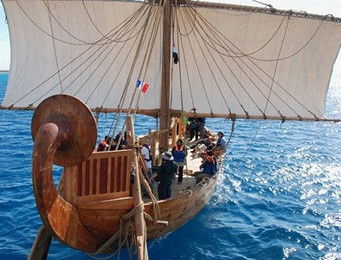 S37 · E10Building Pharaoh's Ship 2010-01-12 · 55 min
A magnificent trading vessel embarks on a royal expedition to a mysterious, treasure-laden land called Punt. Is this journey, intricately depicted on the wall of one of Egypt's most impressive temples, mere myth--or was it a reality? NOVA follows a team of archeologists and boat builders as they reconstruct the mighty vessel shown in the mysterious carving, and then finally launch it in to the Red Sea on a unique voyage of discovery.
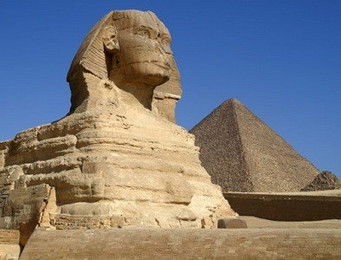 S37 · E11Riddles of the Sphinx 2010-01-19 · 55 min
A team of archeologists carries out experiments that reveal the techniques and labor invested in the carving of the Sphinx. The team also unearths new discoveries about the people who built the gigantic sculpture and why they created such a haunting and stupendous image.
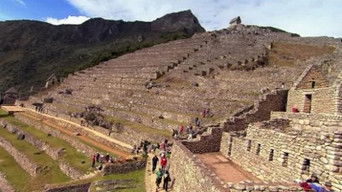 S37 · E12Ghosts of Machu Picchu 2010-02-02 · 55 min
NOVA joins a new generation of archeologists as they probe areas of Machu Picchu that haven’t been touched since the time of the Incas.
 S37 · E13Extreme Cave Diving 2010-02-09 · 55 min
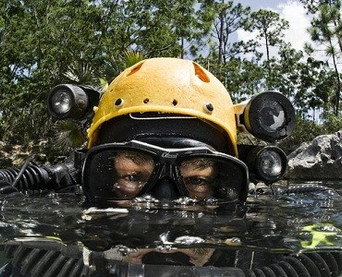
"Extreme Cave Diving" follows a fearless team of scientists as they venture into blue holes—underwater caves that formed during the last ice age, when sea level was nearly 400 feet below what it is today. These caves, little-known treasures of the Bahamas, are one of Earth's least explored and perhaps most dangerous frontiers. The interdisciplinary team of biologists, climatologists, and anthropologists, led by renowned cave explorer Kenny Broad, discover intriguing evidence of the earliest human inhabitants of the islands, find animals seen nowhere else on Earth, and recover a remarkable record of the planet's climate. The stakes are high as the scientists swim hundreds of feet through narrow, dark passages that have trapped and killed divers in the past, but the scientific payoff is considerable.
 S37 · E14The Pluto Files 2010-03-02 · 55 min
When the American Museum of Natural History's Hayden Planetarium stopped calling Pluto a planet, director Neil deGrasse Tyson found himself at the center of a firestorm led by angry Pluto-loving elementary school students. What is it about Pluto—a cold, distant, icy rock—that captures so many hearts? Four years after the IAU (International Astronomical Union) officially reclassified the ninth planet as a plutoid, NOVA travels cross-country with Tyson to find out.
 S37 · E15Hunting the Edge of Space: The Mystery of the Milky Way 2010-04-06 · 55 min
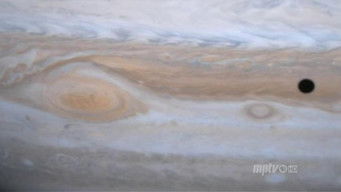
In a two-hour special, NOVA examines how a simple instrument, the telescope, has fundamentally changed our understanding of our place in the universe.
 S37 · E16Hunting the Edge of Space: The Ever Expanding Universe 2010-04-13 · 55 min
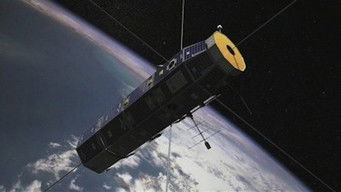
In a two-hour special, NOVA examines how a simple instrument, the telescope, has fundamentally changed our understanding of our place in the universe.
 S37 · E17Mind Over Money 2010-04-27 · 55 min
Exposes the mysterious and surprising nature of the two most powerful forces on the planet: the human mind and money. Using analysis and experiment, this film explores why economists failed to predict the 2008 crash and why we so often make irrational financial decisions.
 S37 · E18Mt. St. Helens Back From the Dead 2010-05-04 · 55 min
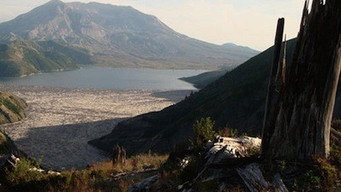
For 27 years, biologist Charlie Crisafulli has been documenting the dramatic return of plant and animal life to Mt. St. Helens after the 1980 eruption. / When Mount St. Helens erupted in 1980, every living thing in the blast zone was buried beneath 300 feet of avalanche debris, covered with steaming mud and, finally, topped with a superheated layer of frothy rock from deep within the earth. Biologist Charlie Crisafulli has remained at the site for 27 years, documenting the dramatic return of plant and animal life to the barren landscape and pioneering a new understanding of the interaction between geologic forces and the life surrounding the mountain.
 S38 · E1Building the Great Cathedrals 2010-10-19 · 55 min
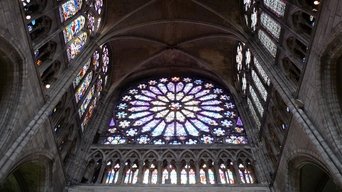
Take a dazzling architectural journey inside those majestic marvels of Gothic architecture, the great cathedrals of Chartres, Beauvais and other European cities. Carved from 100 million pounds of stone, some cathedrals now teeter on the brink of catastrophic collapse. To save them, a team of engineers, architects, art historians, and computer scientists searches the naves, bays, and bell-towers for clues. NOVA investigates the architectural secrets that the cathedral builders used to erect their towering, glass-filled walls and reveals the hidden formulas drawn from the Bible that drove medieval builders ever upward.
 S38 · E2Emergency Mine Rescue 2010-10-26 · 55 min
This one-hour film chronicles the fate of the 33 miners trapped in a collapsed Chilean gold and copper mine in August 2010 and investigates the many challenges faced by both the miners and those working around the clock to bring them safely to the surface. NOVA was on-site at the San José mine in Chile by early September. Conferred special access, NOVA's film crew interviewed engineers, NASA experts, medical personnel, and key figures from the companies that provided drills and crucial rescue equipment to give a more detailed scientific account of the unfolding events. The resulting film, using footage from the scene as well as advanced animation, showcases the extraordinary feats of engineering as well as the biological and geological factors inherent in the rescue. "Emergency Mine Rescue" also examines the psychological and physiological impact of this kind of prolonged ordeal on the miners and those involved in the rescue efforts.
 S38 · E3Trapped in an Elevator 2010-11-02 · 55 min
A documentary examining the ubiquitous transportation device as used in modern day and features a recounting of a real-life horror story of one individual's experiences when stuck in an elevator for an extraordinarily long period of time.
 S38 · E4Dogs Decoded 2010-11-09 · 55 min
"Dogs Decoded" reveals the science behind the remarkable bond between humans and their dogs and investigates new discoveries in genetics that are illuminating the origin of dogs—with surprising implications for the evolution of human culture. Other research is proving what dog lovers have suspected all along: Dogs have an uncanny ability to read and respond to human emotions. Humans, in turn, respond to dogs with the same hormone responsible for bonding mothers to their babies. How did this incredible relationship between humans and dogs come to be? And how can dogs, so closely related to fearsome wild wolves, behave so differently?
 S38 · E5Secrets of Stonehenge 2010-11-16 · 55 min
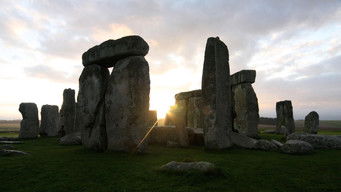
Dated to the late Stone Age, Stonehenge may be the best-known and most mysterious relic of prehistory. Every year, a million visitors are drawn to England to gaze upon the famous circle of stones, but the monument's meaning has continued to elude us. Now investigations inside and around Stonehenge have kicked off a dramatic new era of discovery and debate over who built Stonehenge and for what purpose. How did prehistoric people quarry, transport, sculpt, and erect these giant stones? Granted exclusive access to the dig site at Bluestonehenge, a prehistoric stone-circle monument recently discovered about a mile from Stonehenge, NOVA cameras join a new generation of researchers finding important clues to this enduring mystery.
 S38 · E6Quest for Solomon's Mines 2010-11-23 · 55 min
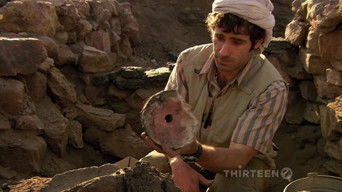
Countless treasure-seekers have set off in search of King Solomon's mines, trekking through burning deserts and scaling the forbidding mountains of Africa and the Levant, inspired by the Bible's account of splendid temples and palaces adorned in glittering gold and copper. Yet to date, the evidence that has claimed to support the existence of Solomon and other early kings in the Bible has been highly controversial. In fact, so little physical evidence of the kings who ruled Israel and Edom has been found that many contend that they are no more real than King Arthur. In the summer of 2010, NOVA and National Geographic embarked on two cutting-edge field investigations that illuminate the legend of Solomon and reveal the source of the great wealth that powered the first mighty biblical kingdoms. These groundbreaking expeditions expose important new clues buried in the pockmarked desert of Jordan, including ancient remnants of an industrial-scale copper mine and a 3,000-year-old message with the words "slave," "king," and "judge."
 S38 · E7Secrets Beneath the Ice 2010-12-28 · 55 min
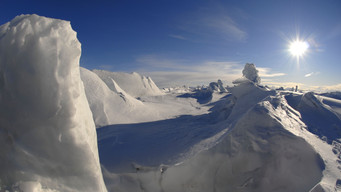
Almost three miles of ice buries most of Antarctica, cloaking a continent half again as large as the United States. But when an Antarctic ice shelf the size of Manhattan collapsed in less than a month in 2002, it shocked scientists and raised the alarming possibility that Antarctica may be headed for a meltdown. Even a ten percent loss of Antarctica's ice would cause catastrophic flooding of coastal cities unlike any seen before in human history. What are the chances of a widespread melt? "Secrets Beneath the Ice" explores whether Antarctica's climate past can offer clues to what may happen. NOVA follows a state-of-the-art expedition that is drilling three-quarters of a mile into the Antarctic seafloor. The drill is recovering rock cores that reveal intimate details of climate and fauna from a time in the distant past when the Earth was just a few degrees warmer than it is today. As researchers grapple with the harshest conditions on the planet, they discover astonishing new clues about Antarctica's past—clues that carry ominous implications for coastal cities around the globe.
 S38 · E8Deadliest Earthquakes 2011-01-11 · 55 min
In 2010, several epic earthquakes delivered one of the worst annual death tolls ever recorded. The deadliest strike, in Haiti, killed more than 200,000 people and reduced homes, hospitals, schools, and the presidential palace to rubble. In exclusive coverage, a NOVA camera crew follows a team of U.S. geologists as they enter Haiti in the immediate aftermath of the tragedy. The team hunts for crucial evidence that will help them determine exactly what happened deep underground and what the risks are of a new killer quake. Barely a month after the Haiti quake, Chile was struck by a quake 100 times more powerful, unleashing a tsunami that put the entire Pacific coast on high alert. In a coastal town devastated by the rushing wave, NOVA follows a team of geologists as they battle aftershocks to measure the displacement caused by the earthquake. Could their work, and the work of geologists at earthquake hot spots around the U.S., one day lead to a breakthrough in predicting quakes before they happen? NOVA investigates compelling new leads in this profound scientific conundrum.