
Seasons & episodes
 S38 · E9Making Stuff: Stronger 2011-01-19 · 55 min
What is the strongest material in the world? Is it steel, Kevlar, carbon nanotubes, or something entirely new? NOVA kicks off the four-part series "Making Stuff" with a quest for the world's strongest substances. Host David Pogue takes a look at what defines strength, examining everything from steel cables to mollusks to a toucan's beak. Pogue travels from the deck of a U.S. naval aircraft carrier to a demolition derby to the country's top research labs to check in with experts who are re-engineering what nature has given us to create the next generation of strong stuff.
 S38 · E10Making Stuff: Smaller 2011-01-26 · 55 min
How small can we go? Could we one day have robots taking "fantastic voyages" in our bodies to kill rogue cells? The triumphs of tiny are seen all around us in the Information Age: transistors, microchips, laptops, cell phones. Now, David Pogue takes NOVA viewers to an even smaller world in "Making Stuff: Smaller," examining the latest in high-powered nano-circuits and micro-robots that may one day hold the key to saving lives.
 S38 · E11Making Stuff: Cleaner 2011-02-02 · 55 min
Can innovations in materials science help clean up our world? In "Making Stuff: Cleaner," David Pogue explores the rapidly developing science and business of clean energy and examines alternative ways to generate it, store it, and distribute it. Is hydrogen the way to go? What about lithium batteries? Does this solve an energy problem or create a new dependency? Pogue investigates the latest developments in bio-based fuels and in harnessing solar energy for our cars, homes, and industry in a program full of the stuff of a sustainable future.
 S38 · E12Making Stuff: Smarter 2011-02-09 · 55 min
"Making Stuff: Smarter" looks at materials that respond to their environments and even learn, such as an airplane wing that changes shape as it flies. Scientists are turning to nature in developing such "smart" stuff. Sharkskin, for instance, has inspired a substance that, when sprayed in hospitals, could eliminate antibiotic-resistant bacteria. David Pogue visits a scientist who has even created a material that can render objects invisible. "Smarter" concludes with a vision of the ultimate in "life-like" stuff: programmable matter that could create a duplicate of a human being.
 S38 · E13Smartest Machine on Earth 2011-02-09 · 55 min
Augmenting human intelligence is a lot tougher than it looks, and the promise of "Hal" from 2001: A Space Odyssey is still just a fantasy. But scientists are edging closer with machines like "Watson," an IBM computing system that is gearing up for a first-of-its-kind challenge: taking on human contestants on the game show Jeopardy! With a brain the size of 2,400 home computers and a database of about 10 million documents, will Watson be able to compute its way to victory? Given the complexity of human language, could any computer truly understand it? It remains to be seen if this amalgam of circuits and silicon can really take us closer to the dream of a fully developed artificial intelligence, a truly "conscious" machine. Win or lose, the difficulty of mimicking the human thought process with software is showing artificial-intelligence researchers that there's more than one way to be "intelligent."
 S38 · E14Crash of Flight 447 2011-02-16 · 55 min
On June 1, 2009, Flight AF447, an Air France Airbus A330 flying from Rio de Janeiro to Paris, disappeared over the Atlantic Ocean with the loss of all 228 lives. How could a state-of-the-art airliner with elaborate electronic safety and navigation features and a faultless safety record simply fall out of the sky? NOVA assembles a team of seasoned pilots, engineers, and safety experts to examine the evidence that emerged in the weeks following this horrific disaster. What led Flight 447's crew to fly straight into a towering thunderstorm? With expert testimony, satellite weather images, and messages transmitted by the doomed plane's computer system, NOVA pieces together the fatal chain of events.
 S38 · E15Venom: Nature's Killer 2011-02-23 · 55 min
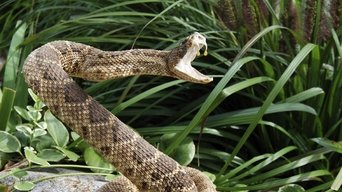
Over the millennia, thousands of creatures have developed that most sophisticated of biological and chemical weapons: venom. These complex chemicals can scramble your brain signals, paralyze your muscles, puncture your blood cells, even begin digesting you from within. But nature's most potent toxins might also contain the keys to a new generation of advanced drugs. Such drugs might help doctors treat heart attacks, cancer, diabetes, and other serious illnesses. Follow NOVA crews as they join scientists on a dangerous quest to track down and capture the world's most venomous animals - to find out both how they can kill us, and how they can save us.
 S38 · E16Japan's Killer Quake 2011-03-30 · 55 min
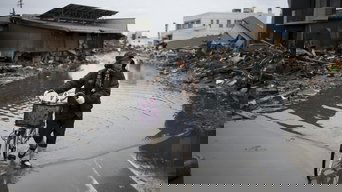
In its worst crisis since World War II, Japan faces disaster on an epic scale: a death toll likely in the tens of thousands, massive destruction of homes and businesses, shortages of water and power, and the specter of nuclear meltdown. With exclusive footage, NOVA captures the unfolding human drama and offers a clear-headed investigation of what triggered the earthquake, tsunami, and subsequent nuclear crisis. Can science and technology ever prevent devastation in the face of overwhelmingly powerful forces of nature?
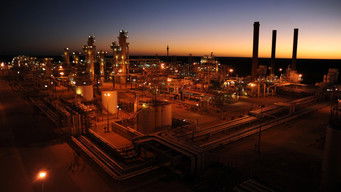 S38 · E17Power Surge 2011-04-20 · 55 min
Can emerging technology defeat global warming? The United States has invested tens of billions of dollars in clean energy projects as our leaders try to save our crumbling economy and our poisoned planet in one bold, green stroke. Are we finally on the brink of a green-energy "power surge," or is it all a case of too little, too late? From solar panel factories in China to a carbon capture-and-storage facility in the Sahara desert to massive wind and solar installations in the United States, NOVA travels the globe to reveal the surprising technologies that just might turn back the clock on climate change. NOVA will focus on the latest and greatest innovations, including everything from artificial trees to green reboots of familiar technologies like coal and nuclear energy. Can our technology, which helped create this problem, now solve it?
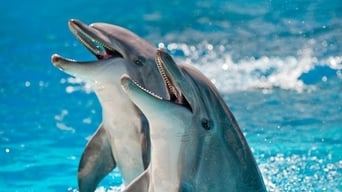 S38 · E18How Smart Are Animals? 2011-02-09 · 55 min
Would you care to match wits with a dog, an octopus, a dolphin, or a parrot? You may think twice after watching the segments in this NOVA scienceNOW episode. While we may not be ready to send pets to Harvard, the remarkable footage and findings presented here demonstrate that many animal species are much smarter than we assume and in ways we had never imagined.
 S39 · E1Engineering Ground Zero 2011-09-07 · 55 min
To commemorate the 10th anniversary of 9/11, NOVA presents an epic story of engineering, innovation, and the perseverance of the human spirit. With extraordinary access granted by The Port Authority of New York and New Jersey, “Engineering Ground Zero” follows the five-year construction of One World Trade Center (1 WTC) and the National September 11 Memorial & Museum.
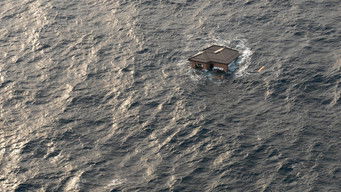 S39 · E2Surviving the Tsunami 2011-09-28 · 55 min
The earthquake that hit the northern coast of Japan on March 11, 2011, was recorded at magnitude 9.0 the worst ever recorded in Japan. It generated an unprecedented tsunami, obliterating coastal villages and towns in a matter of minutes. In some areas, the tsunami climbed above 100 feet in height and traveled miles inland. Amazingly, amateur and professional photographers captured it all on video, including remarkable tales of human survival, as ordinary citizens became heroes in a drama they never could have imagined. As the waves rush in, a daughter struggles to help her elderly mother ascend their rooftop to safety; a man climbs onto an overpass just as the wave overtakes his car. These never-before-seen stories are captured in video and retold after the fact by the survivors who reveal what they were thinking as they made their life-saving decisions. Their stories provide lessons for how we should all act in the face of life-threatening disasters.
 S39 · E3Finding Life Beyond Earth: Are We Alone? 2011-10-19 · 55 min
Take a spectacular trip to distant realms of our solar system to discover where secret forms of life may lie hidden. Combining the latest telescope images with dazzling animation, this program immerses audiences in the sights and sounds of alien worlds, while top astrobiologists explain how these places are changing how we think about the potential for life in our solar system. We used to think our neighboring planets and moons were fairly boring—mostly cold, dead rocks where life could never take hold. Today, however, the solar system looks wilder than we ever imagined.
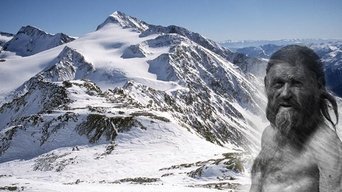 S39 · E4Iceman Murder Mystery 2011-10-26 · 55 min
He’s been dead for more than 5,000 years and poked, prodded, and probed by scientists for the last 20. Yet Ötzi the Iceman, the famous mummified corpse pulled from a glacier in the Italian Alps, continues to keep many secrets. Now, through an autopsy like none other, scientists will attempt to unravel mysteries about this ancient mummy, revealing not only the details of Ötzi’s death but also an entire way of life. How did people live during Ötzi’s time, the Copper Age? What did they eat? What diseases did they cope with? Join NOVA as we defrost the ultimate time capsule—the 5,000-year-old man
 S39 · E5The Fabric of the Cosmos: What is Space? 2011-11-02 · 55 min
Space. It separates you from me, one galaxy from the next, and atoms from each other. It is everywhere in the universe. But to most of us, space is nothing, an empty void. Well, it turns out space is not what it seems.
 S39 · E6The Fabric of the Cosmos: The Illusion of Time 2011-11-09 · 55 min
Time. We waste it, save it, kill it, make it. The world runs on it. Yet, ask physicists what time actually is, and the answer might shock you: They have no idea. Even more surprising, the deep sense we have of time passing from present to past may be nothing more than an illusion. How can our understanding of something so familiar be so wrong?
 S39 · E7The Fabric of the Cosmos: Quantum Leap 2011-11-16 · 55 min
Join Brian Greene on a wild ride into the weird realm of quantum physics, which governs the universe on the tiniest of scales. Brian brings quantum mechanics to life in a nightclub like no other, where objects pop in and out of existence, and things over here can affect others over there, instantaneously-without anything crossing the space between them.
 S39 · E8The Fabric of the Cosmos: Universe or Multiverse? 2011-11-23 · 55 min
Hard as it is to swallow, cutting-edge theories are suggesting that our universe may not be the only universe. Instead, it may be just one of an infinite number of worlds that make up the multiverse. In this show, Brian Greene takes us on a tour of this brave new theory at the frontier of physics, explaining why scientists believe it's true and showing what some of these alternate realities might be like.
 S39 · E9Deadliest Volcanoes 2012-01-04 · 55 min
Millions of people around the world live in the shadow of active volcanoes. Under constant threat of massive volcanic eruptions, their homes and their lives are daily at risk from these sleeping giants. From Japan’s Mount Fuji to the "Sleeping Giant" submerged beneath Naples to the Yellowstone "supervolcano" in the United States, we will travel with scientists from around the world who are at work on these sites, attempting to discover how likely these volcanoes are to erupt, when it might happen, and exactly how deadly they could prove to be.
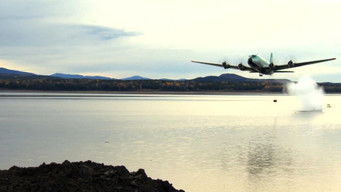 S39 · E10Bombing Hitler's Dams 2012-01-11 · 55 min
In 1943 a squadron of Lancaster bombers staged one of the most audacious raids in military history: destroying two gigantic dams in Germany’s industrial heartland and cutting the water supply to arms factories. Their secret weapon? A revolutionary bouncing bomb invented by British engineer Barnes Wallis. Wallis and the pilots of 617 Squadron—a lively mix of Britons, Australians, Americans, and Canadians—were hailed as heroes who dealt a mighty blow to the German war machine. Now, NOVA recreates the extreme engineering challenges faced by Wallis and the pilots. A crack team of experts, including dam engineers, explosives specialists, mechanics, and aircrew, steps into the shoes of the "dambusters" and attempts to overcome each of the obstacles the original team faced. They must adapt a vintage World War II DC-4 to carry a bomb the size of an oil drum, train to drop it from a dangerously low altitude in pitch darkness, and get it to bounce over obstacles and onto the target, a scale model the German dam struck by the original dambusters. Can they succeed in destroying the dam and unraveling the mysteries of the one-of-a-kind bouncing bomb?
 S39 · E113D Spies of WWII 2012-01-18 · 55 min
During World War II, Hitler’s scientists developed terrifying new weapons of mass destruction. Alarmed by rumors of advanced rockets and missiles, Allied intelligence recruited a team of brilliant minds from British universities and Hollywood studios to a country house near London. Here, they secretly pored over millions of air photos shot at great risk over German territory by specially converted, high-flying Spitfires. Peering at the photos through 3D stereoscopes, the team spotted telltale clues that revealed hidden Nazi rocket bases. The photos led to devastating Allied bombing raids that dealt crucial setbacks to the German rocket program and helped ensure the success of the D-Day landings. With 3D graphics that recreate exactly what the photo spies saw, NOVA tells the suspenseful, previously untold story of air photo intelligence that played a vital role in defeating the Nazis.
 S39 · E12Mystery of a Masterpiece 2012-01-25 · 55 min
In October 2007, a striking portrait of a young woman in Renaissance dress made world news headlines. Originally sold nine years before for around $20,000, the portrait is now thought to be an undiscovered masterwork by Leonardo da Vinci worth more than $100 million. How did cutting-edge imaging analysis help tie the portrait to Leonardo? NOVA meets a new breed of experts who are approaching "cold case" art mysteries as if they were crime scenes, determined to discover "who committed the art." And it follows art sleuths as they deploy new techniques to combat the multibillion-dollar criminal market in stolen and fraudulent art.
 S39 · E13Ice Age Death Trap 2012-02-01 · 55 min
In a race against developers in the Rocky Mountains, archeologists uncover a unique fossil site packed with astonishingly well-preserved bones of mammoths, mastodons, and other giant extinct beasts. The discovery opens a highly focused window on the vanished world of the Ice Age in North America.
 S39 · E14Separating Twins 2012-02-08 · 55 min
This is the incredible story of Trishna and Krishna, twin girls born joined at the head. Abandoned shortly after birth at an orphanage in Bangladesh, they had little chance of survival, until they were saved and taken to Australia by an aid worker. After two years battling for life, the twins are ready for a series of delicate operations that will prepare them for the ultimate challenge: a marathon separation surgery that will allow them to live truly separate lives. Since the beginning, surgeons knew there was no guarantee of survival for either of the girls—but without surgery there was no hope at all. With exclusive access to this extraordinary human and medical drama, our cameras have been with Trishna and Krishna and their caregivers at each moment of their journey.